

 English
 Deutsch
News
Home / News / Industry News / Why the Kilowatt-hour Is the Essential Unit for Energy Metering and Billing
Every electricity bill lists a number followed by “kWh” — but what does it truly represent? In energy metering, a unit of energy typically used for metering is the kilowatt-hour. While physicists think in joules, utilities and smart meters rely on this practical block to quantify consumption, determine costs, and drive energy efficiency decisions. This article decodes the essential units behind your meter, clarifies power versus energy, and reveals why kilowatt-hour remains the global standard for billing and monitoring electrical usage.
Modern electrical grids handle millions of transactions each day, all based on a single consistent unit. Understanding these measurements helps facility managers identify waste, homeowners lower bills, and engineers design better power energy meter systems without guesswork.
Most metering confusion stems from mixing up power (instantaneous rate) and energy (accumulated over time). A power energy meter records both, but billing strictly uses energy. Power is like the speed of a car; energy is the total distance travelled. A 2,000-watt electric heater running for three hours consumes 6,000 watt-hours or 6 kWh, while the same heater switched on for only one hour records just 2 kWh.
Utility revenue depends on total energy delivered. Even if a factory draws extremely high power for brief seconds, the energy accumulated across the billing period defines the charge. Modern meters integrate power samples every few seconds to produce a precise energy register (kWh). Without this difference, customers would be penalised for short peaks, and generation planning would become impossible.
The graphic above illustrates how any variation in power draw contributes to total energy. A meter integrates this area continuously. That is why an old incandescent bulb (60W) left on overnight consumes roughly 0.48 kWh, while a modern LED (9W) uses only 0.072 kWh for the same duration – a direct consequence of lower power draw multiplied by time.
The kilowatt-hour is the workhorse of electrical commerce. One kWh equals the energy delivered by a steady 1,000-watt load running for one hour. Residential meters in North America, Europe, and Asia all register consumption in kWh, making tariffs comparable. Why did the industry select this unit over joules? Practicality: a typical household monthly consumption (say, 900 kWh) converts to 3.24 billion joules – an unwieldy number for bills and displays.
Average annual kWh per household: ~11,000 kWh (global median varies 2,500–14,000 kWh based on climate and appliances). Billing in kilowatt-hours allows consumers to relate directly to appliance nameplates. A 1.5 kW air conditioner running 8 hours = 12 kWh/day, instantly understood by any user.
Metering in kWh directly aligns with generation costs (fuel, maintenance) and time-of-use pricing. In many markets, the price per kWh varies by season or hour, encouraging load shifting. Without this compact and intuitive unit, demand-side management would be far more complex.
The joule is the SI unit of energy, widely used in physics, thermodynamics, and material science. One joule equals the work done by one watt of power for one second. But in energy metering, the kilowatt-hour (kWh) is preferred because 1 kWh = 3.6 million joules. The table below shows how quickly joule values become astronomical in daily electricity contexts.
| Energy amount | In kilowatt-hours (kWh) | In joules (millions) |
|---|---|---|
| LED bulb (10W) for 10 hours | 0.1 kWh | 0.36 MJ |
| Monthly office baseline (3,000 kWh) | 3,000 kWh | 10,800 MJ |
| Large industrial monthly usage (500,000 kWh) | 500,000 kWh | 1,800,000 MJ |
| Electric car annual consumption (4,000 kWh) | 4,000 kWh | 14,400 MJ |
From a meter design standpoint, digital registers store energy in watt-hours or kilowatt-hours. No meter displays “megajoules” to consumers, because billing regulators standardise around kWh. However, many engineering specifications still reference joules for very small-scale measurements (like capacitor stored energy). For energy metering in buildings, substations, or renewable generation, the kWh rules because it matches the time base of human activity (hours) rather than seconds.
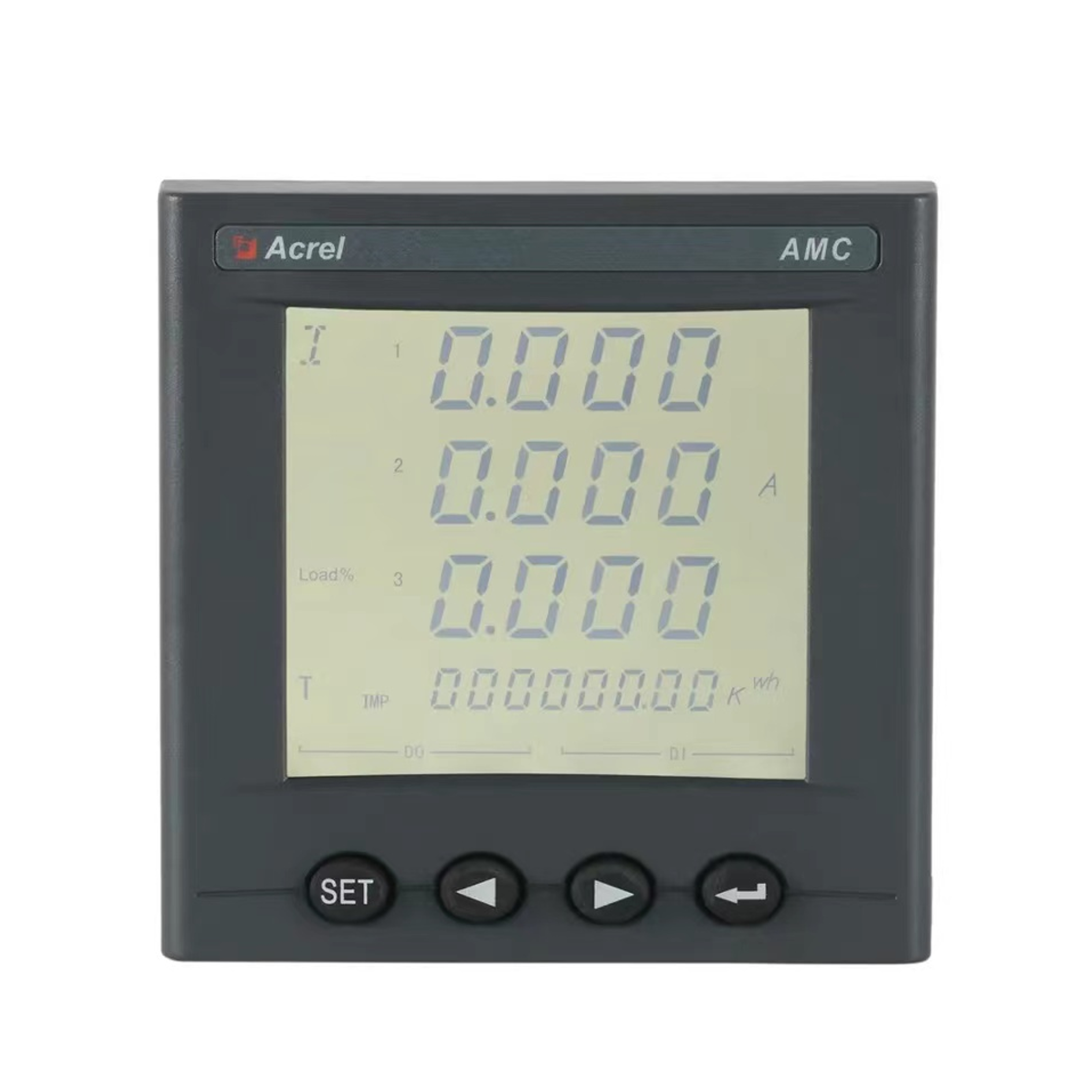
Modern solid-state meters sample voltage and current hundreds of times per second, calculating instantaneous power (watts) and accumulating energy (kWh) through digital integration. Beyond basic kWh, advanced meters track additional metrics: reactive energy (kvarh), apparent energy (kVAh), and demand (kW) peaks. However, the primary billing register remains active energy in kWh, representing true consumed energy transferred to the load.
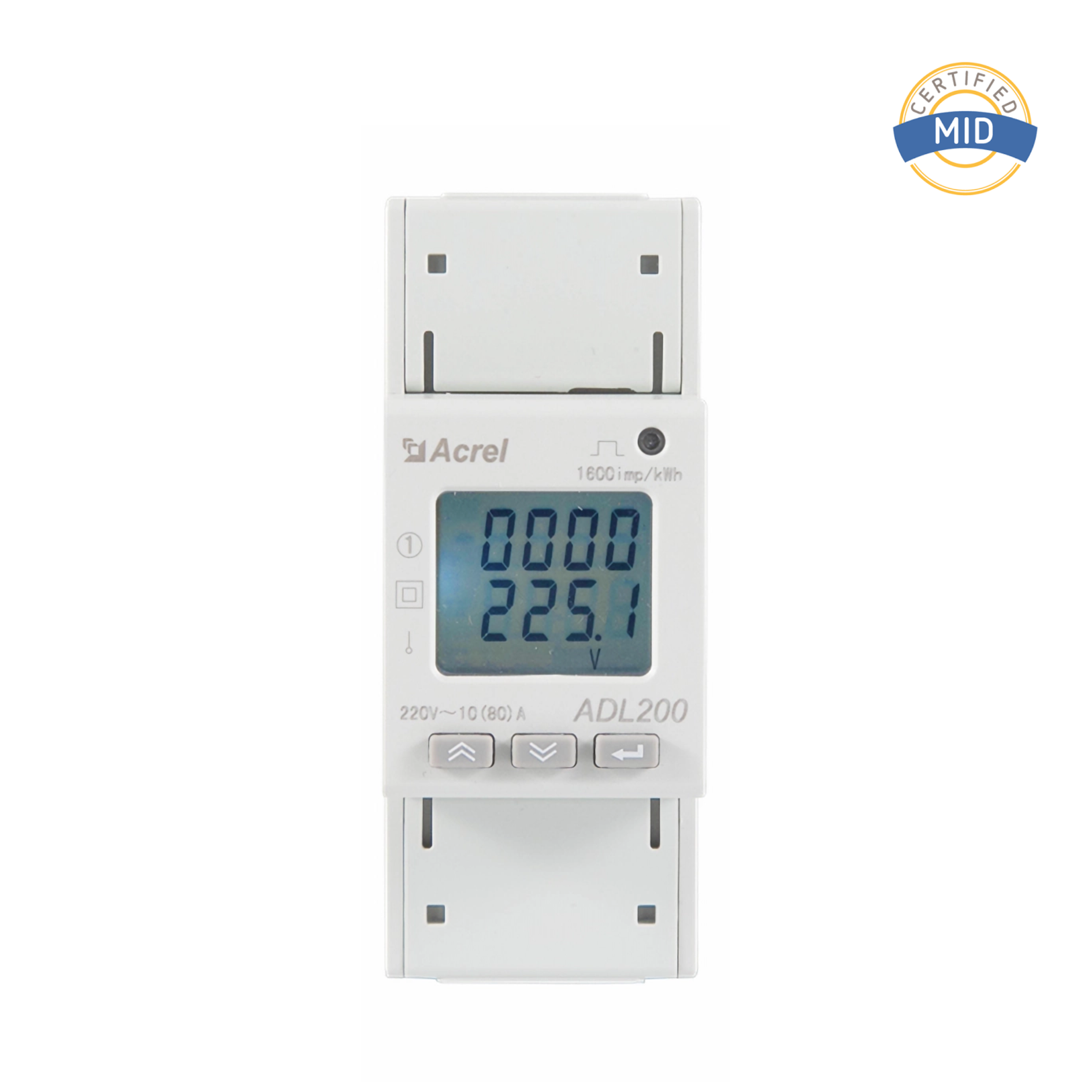
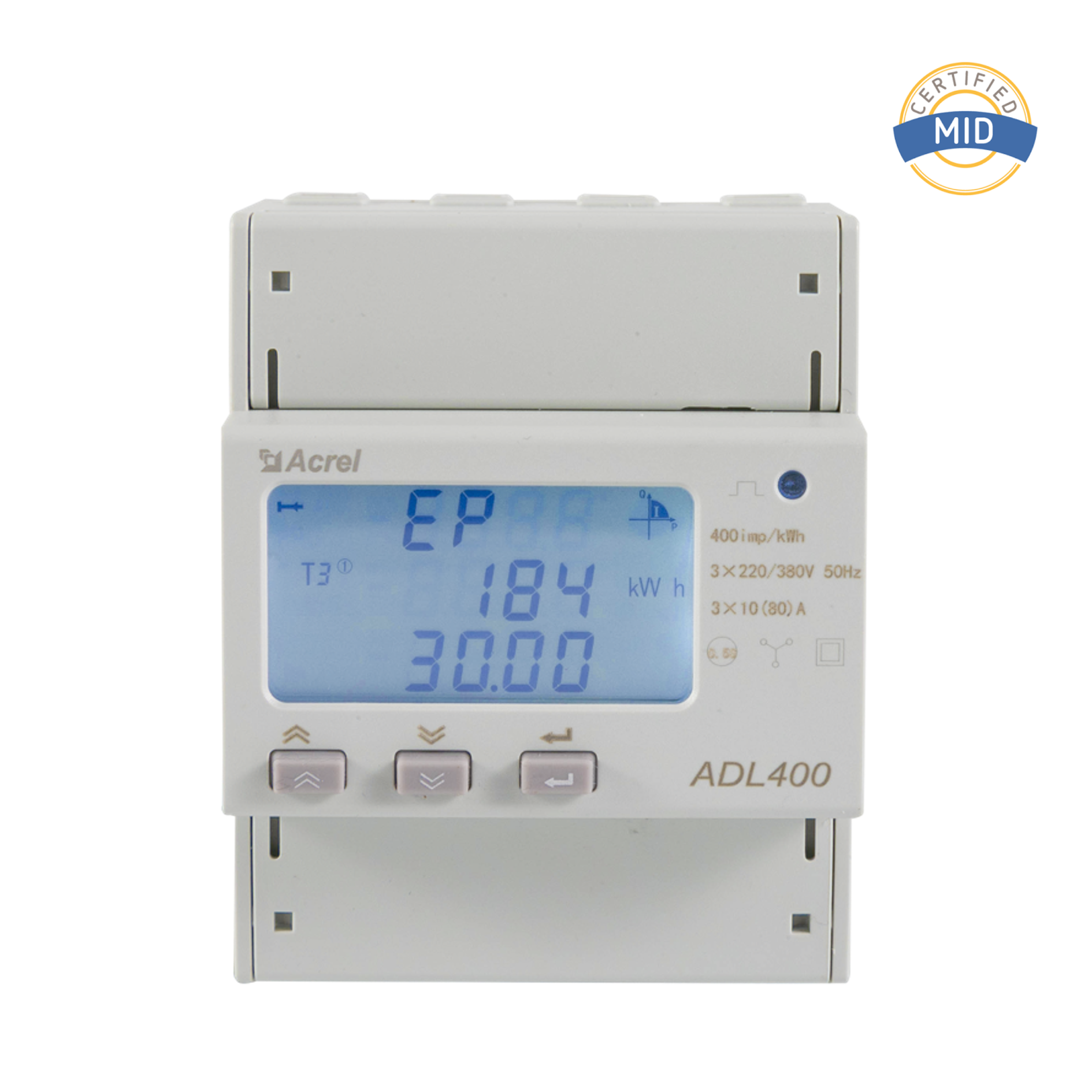
Every energy meter applies a calibration constant: a certain number of pulses per kWh. For example, a residential meter might generate 1,000 impulses per kWh, each representing 1 Wh of energy. A power energy meter uses these impulses to update the LCD display and transmit consumption via communication protocols. Field tests often compare meter pulse output with a reference standard, ensuring accuracy within ±0.2% for modern electronic meters.
Above: typical energy metering architecture showing current sensors, voltage inputs, and energy calculation engine (illustrative). This hardware ensures that a unit of energy typically used for metering — the kWh — is recorded with high fidelity under varying load conditions.
Consumption metrics also include time-of-use registers: peak kWh, shoulder kWh, and off-peak kWh, allowing utilities to reflect generation costs. In European Union, more than 80% of new meters capture such granular data, empowering users to shift high-consumption activities to cheaper periods.
Understanding energy metering becomes concrete when we examine typical appliances. The table below shows realistic kWh consumption figures based on average usage patterns (non-brand-specific data from open energy audits). You can use these values to estimate your own monthly billing units.
| Appliance / Device | Typical Power (W) | Daily usage (hours) | Daily energy (kWh) | Monthly energy (kWh) |
|---|---|---|---|---|
| Refrigerator (Energy Star modern) | 150 (cycling) | 8 (motor runtime) | 1.2 kWh | 36 kWh |
| Central AC (3.5 kW cooling) | 2,800 | 6 (summer) | 16.8 kWh | 504 kWh |
| Washing machine (warm wash) | 500 | 1 hour (3 cycles/week avg) | 0.5 kWh | 6.5 kWh |
| Electric water heater (50 gal) | 4,500 | 1.5 (recovery) | 6.75 kWh | 202 kWh |
| Desktop computer + monitor | 150 | 5 hours | 0.75 kWh | 22.5 kWh |
By summing these monthly kWh estimates, a household can predict 80% of its electricity bill. Advanced metering provides 15-minute interval data, allowing users to detect “vampire loads” — devices that consume 5-15 W continuously (adding up to 10–35 kWh monthly). The key lesson: every watt-hour matters, but the meter only shows aggregated kWh at the end of the period.
Although modern meters are precise, several conditions can introduce minor deviations in the recorded kWh. Temperature extremes (beyond -25°C to +60°C) may shift current transformer linearity. Power factor lower than 0.5 can affect certain induction-type meters, although static meters handle wide ranges well. Additionally, wiring errors like swapped voltage/current inputs cause extreme errors.
Field audits in commercial buildings have revealed that nearly 8% of legacy meters drift beyond ±3% after 15 years in harsh environments. Upgrading to static power energy meter technology reduces error below ±0.5% and ensures fair billing based on true consumed energy (kWh).
For industrial users, current transformers (CTs) add ratio and phase errors. Regular verification of CT accuracy ensures the reported kWh mirrors actual energy flow. Without correct unit comprehension, a 1% CT error on a 1,000,000 kWh/month facility translates to 10,000 kWh misbilling.
A kilowatt-hour (kWh) represents the energy consumed by a 1,000-watt load operating for one hour. Utilities choose it because it directly corresponds to hourly usage patterns, avoids large numbers (unlike joules), and simplifies billing calculations. Every standard power energy meter records energy in kWh.
You can remember that 1 kWh equals 3.6 million joules. For practical energy metering, divide the joule number by 3.6 million. For example, 18 million joules represent 5 kWh. Most meters never output joules; only engineering contexts use them.
kW (kilowatt) measures instantaneous power demand, while kWh measures cumulative energy. Residential customers are billed only for kWh. However, some commercial tariffs include a demand charge (based on highest 15-minute kW average) plus energy charge (kWh). Your meter separately records peak demand in kW and total energy in kWh.
Yes. Use a portable energy monitor (plug-in meter) for individual appliances, then sum their daily kWh. Alternatively, turn off all breakers except one known load (e.g., 1,500W space heater) for one hour and compare the utility meter’s kWh increment. A discrepancy under 2% is considered normal.
A watt is power at a single moment. A watt-hour (or kilowatt-hour) is energy accumulated over time. A meter samples watts thousands of times per second and adds them into watt-hours. Without this distinction, you could not quantify total usage – only instantaneous rate.
Decoding energy metering units leads to smarter usage and accurate billing. Whether you analyse a household electricity bill or design a sub-metering system for a factory, the kilowatt-hour remains the universal dialect. From the difference between power and energy, to the practical reasons why joules stay in labs, each concept empowers you to interpret consumption metrics meaningfully. As grids evolve with renewables and storage, the kWh will continue bridging generation, metering, and consumer behaviour.


 Email: [email protected]
 Phone: +86-18702106858 / +86-21-69156352
No.253 Yulv Road, Jiading District, Shanghai, PRC 201801





