
 English
 Deutsch
News

Internal Construction and Types of Current Transformers
Current transformers are among the most precisely engineered components in power measurement and protection systems. Yet their internal structure is rarely examined in detail. Understanding what is inside a current transformer, how each part is selected, and why different construction types exist gives engineers, technicians, and procurement professionals the foundation to make better decisions about accuracy, installation, and long-term reliability.
This article walks through the anatomy of a current transformer from core material to outer enclosure, explains the role of each component, and classifies the major construction types used across low-voltage, medium-voltage, and high-voltage applications.
The Core: Heart of Every Current Transformer
The magnetic core is the single most performance-defining component inside a current transformer. It serves as the medium through which energy from the primary conductor is transferred to the secondary winding by electromagnetic induction. The shape, material, and cross-sectional area of the core determine nearly every performance characteristic of the finished device.
Core Geometry
Most current transformer cores are manufactured in a toroidal (ring) shape. This closed-loop geometry ensures that the magnetic flux path is continuous, which minimizes flux leakage and contributes to high accuracy. Toroidal cores are standard in revenue-grade and protection-class instruments because they yield very low phase angle errors at rated current.
For wound-type current transformers used in high-ratio or specialty applications, cores may be laminated in rectangular or C-shaped configurations assembled from grain-oriented electrical steel strips. These laminated cores allow the manufacturer to tailor the cross-sectional area precisely for a target burden and accuracy class.
Magnetic Core Materials
The choice of magnetic core material directly controls the transformer's accuracy class, saturation behavior, and frequency response. The table below summarizes the most common options:
| Material | Relative Permeability (approx.) | Typical Use Case | Key Advantage |
|---|---|---|---|
| Cold-Rolled Grain-Oriented Silicon Steel (CRGO) | 5,000 – 30,000 | Metering and protection CTs, 50/60 Hz | Low core loss, cost-effective |
| Nickel-Iron Alloy (e.g., 78% Ni) | 50,000 – 200,000 | High-accuracy revenue metering, class 0.1 and 0.2 | Extremely low magnetizing current |
| Nanocrystalline Alloy | Up to 150,000 | Wide-frequency, harmonic-rich environments | Excellent high-frequency response |
| Amorphous Metal (Metglas) | 100,000+ | Energy metering in smart grid applications | Very low hysteresis losses |
| Ferrite | 1,000 – 15,000 | High-frequency current sensing (kHz range) | Negligible eddy current loss at high frequency |
For standard power-frequency metering at 50 Hz or 60 Hz, CRGO silicon steel remains the dominant choice because of its favorable balance between cost, availability, and magnetic performance. Nickel-iron alloys are reserved for precision revenue-metering CTs where errors must be held within 0.1% or 0.2% across a wide burden range.
Core Lamination and Insulation
To reduce eddy current losses, silicon-steel cores are laminated into thin strips, typically 0.23 mm to 0.35 mm thick. Each lamination is coated with a thin insulating layer — usually a phosphate treatment or an organic varnish — that prevents current from flowing between layers. Tighter lamination and thinner strips reduce losses and heat buildup during sustained overload conditions.
Secondary Winding: Converting Flux to a Measurable Signal
The secondary winding is wound directly onto the core and is responsible for producing the output current that instruments, relays, and meters measure. The physical construction of this winding affects both accuracy and thermal performance.
Winding Wire and Conductor Material
Virtually all secondary windings are wound from enameled copper wire. Copper's combination of high electrical conductivity, ductility, and well-understood temperature characteristics makes it the standard choice. In specialized lightweight designs, aluminum wire is occasionally used, though it requires larger cross-sections to achieve the same resistance target and demands careful termination to prevent corrosion.
The wire gauge is chosen to meet the secondary winding resistance specification (often called Rct — the resistance of the secondary winding). A lower Rct allows a greater portion of the available secondary EMF to be delivered to the external burden rather than dissipated internally as heat. This directly affects accuracy at low burden levels.
Winding Technique and Turn Count
The secondary winding turn count determines the transformation ratio in combination with the primary turns. For a standard bar-type or window-type current transformer where the primary is a single pass-through conductor, the primary turn count is 1. The secondary turns are then set to achieve the desired ratio — for example, 200 turns for a 200:1 ratio in a 200 A / 1 A transformer.
Windings are distributed uniformly around the toroid to ensure balanced magnetomotive force and to minimize leakage flux. Uniformity is especially critical in high-accuracy designs where even small asymmetries in winding distribution can introduce measurable phase angle errors.
Insulation Between Layers
Multi-layer windings require inter-layer insulation to prevent voltage breakdown between turns at different potentials. Common inter-layer insulating materials include:
- Polyester film tape (Mylar-type) — used in low to medium voltage CTs for its balance of dielectric strength and thin profile
- Polyimide film (Kapton-type) — selected when operating temperatures exceed 130°C or when very thin insulation is needed without sacrificing voltage withstand
- Nomex paper — used in dry-type, high-temperature environments where cellulose-based materials would degrade
Primary Conductor Arrangements in Current Transformer Construction
The primary side of a current transformer can be arranged in several distinctly different ways, each resulting in a different mechanical construction type. This is the primary basis for classifying CTs by physical design.
Bar Type
A solid or hollow bus bar passes through the window of the core-and-winding assembly. No primary winding is wound onto the device. The bar itself constitutes one primary turn.
Window Type
Similar to bar type, but the primary conductor is an external cable or busbar passed through an open window in the CT body. The transformer has no built-in primary conductor.
Wound Type
One or more primary turns are wound onto the core alongside the secondary winding. Enables high transformation ratios from small primary currents.
Split Core
The core is divided into two separable halves that can be opened and clamped around an existing conductor without disconnecting the circuit.
Bar Type Current Transformer Construction
A bar type current transformer uses a fixed, factory-installed primary conductor — typically a copper or aluminum bar — that passes through the center of the toroidal or rectangular core-and-winding assembly. The core and secondary winding are encapsulated around this bar. This construction offers maximum mechanical rigidity and is preferred for switchgear and busbar installations where primary current ratings range from 400 A to several thousand amperes.
Because the bar is factory-set, bar-type CTs are not field-adjustable. The rated primary current is determined at manufacturing. They are, however, extremely stable over decades of service because there are no mechanical joints in the primary path that can loosen or corrode.
Window Type Current Transformer Construction
Window-type CTs, sometimes called ring-type or donut current transformers, consist of a toroidal core wound with the secondary coil and enclosed in a housing that has a central aperture. The primary conductor — whatever cable or busbar carries the measured current — is simply threaded through this aperture at installation. No electrical connection is made between the CT body and the primary conductor; the transformer operates purely by induction.
This design is versatile because a single CT model can be installed on conductors of varying cross-sections, as long as the conductor fits physically through the window. Window-type CTs are extensively used in panel boards, cable monitoring, and retrofitting existing installations.
Wound Current Transformer Construction
In a wound current transformer, the primary winding consists of one or more turns of insulated copper conductor wound directly onto the core alongside the secondary. This arrangement is used when the primary current is relatively low — typically below 100 A — and a single-pass conductor would produce insufficient flux for accurate measurement.
By adding two, three, or more primary turns, the effective transformation ratio is multiplied without requiring a physically larger core. A wound CT with 5 primary turns and 1,000 secondary turns has an effective ratio of 1,000:5, or 200:1, with a 5-turn primary driving greater flux for the same line current than a single-bar primary would.
Wound-type CTs are typically more expensive than bar or window types at the same current rating, because the additional winding process adds labor and the primary conductor insulation must be rated for the full line-to-line voltage of the system.
Split Core Current Transformer: Construction and Applications
The split core current transformer solves a specific practical problem: how to install a current transformer on a conductor that cannot be de-energized or disconnected. The magnetic core is divided into two halves along a precision-machined joint. A hinge or latch mechanism holds the halves closed during operation and allows them to be separated for installation.
When the core halves are open, the CT can be positioned around a live cable. Once closed and latched, the magnetic circuit is complete and the device functions identically to a solid toroidal CT of equivalent dimensions.
The key engineering challenge in split-core design is minimizing the air gap at the joint. Even a microscopic gap in the magnetic circuit dramatically increases the magnetizing current required and introduces errors, particularly at low primary current levels near 5% to 20% of the rated value. Manufacturers address this through:
- Precision machining of the mating surfaces to tolerances under 10 micrometers
- Use of high-permeability core materials that are more tolerant of small residual gaps
- Spring-loaded latches that apply consistent clamping force to keep the halves firmly mated
- Nanocrystalline or amorphous core materials, which maintain lower error even with slightly imperfect closure
Split-core CTs are widely used in energy auditing, building energy management systems, retrofitted power monitoring panels, and any application where installation must be performed without shutting down the monitored circuit. They are available in accuracy classes from Class 1 down to Class 0.5 depending on the core material and joint quality.
Toroidal Current Transformer: Why the Ring Shape Dominates
The toroidal current transformer is by far the most common construction used in modern panel-mount and inline current measurement. Its defining feature is the doughnut-shaped core, which creates a closed magnetic path with no deliberate air gap (in solid-core versions) and no exposed pole faces.
Magnetic Efficiency of the Toroidal Core
Because the magnetic flux circulates entirely within the core material in a toroidal design, essentially no flux escapes into the surrounding air. This has two practical consequences. First, the magnetizing current required to establish the working flux is very low, which directly reduces ratio error and phase displacement. Second, the toroidal CT is much less sensitive to the position of the primary conductor within the window — a property called positional error immunity — compared to rectangular-core designs.
In a well-designed toroidal CT, moving the primary conductor from the center of the window to an off-center position introduces less than 0.05% additional ratio error. In a rectangular-core CT, the same displacement can introduce errors exceeding 0.3%.
Manufacturing of Toroidal Cores
Toroidal cores for current transformers are manufactured by one of three methods depending on the target material:
- Tape-wound cores — A continuous strip of silicon steel, nickel-iron alloy, or nanocrystalline ribbon is wound in a spiral around a mandrel and then heat-treated to relieve mechanical stress introduced during winding. This method is used for the highest accuracy grades.
- Stacked lamination cores — Individual punched laminations are stacked and interleaved to form a ring, commonly used for larger-diameter cores where tape winding would produce excessive internal stress.
- Powdered or sintered ferrite cores — Used for high-frequency applications; the ferrite is pressed into a toroidal mold and sintered at high temperature.
Insulation Systems in Current Transformers
CT insulation must perform two functions simultaneously: isolating the high-voltage primary conductor from the low-voltage secondary circuit, and protecting the winding and core assembly from environmental degradation. The insulation system chosen depends on the rated voltage, the ambient environment, and the mechanical requirements of the application.
Resin Encapsulation (Epoxy or Polyurethane Molding)
The majority of low-voltage and medium-voltage current transformers used in metering panels and switchgear are manufactured by casting or vacuum-injecting epoxy resin around the wound core assembly. This process, often called molded-case construction, creates a solid, void-free insulating body that:
- Provides dielectric strength exceeding 3 kV/mm for standard epoxy systems
- Eliminates moisture ingress without additional sealing
- Mechanically protects the core and winding from vibration and shock
- Allows precise dimensional control of the external body for panel mounting
Vacuum pressure impregnation (VPI) is used for larger assemblies where casting is impractical. The winding is immersed in resin under vacuum to remove trapped air, then pressurized to force resin into every void before curing.
Oil-Filled Insulation
High-voltage current transformers rated above 36 kV typically use mineral oil as the primary insulating and cooling medium. The wound core and secondary assembly is placed inside a sealed metal tank filled with transformer-grade mineral oil. Cellulose paper insulation is wound around the primary conductor in multiple layers, building up the creepage distance needed to withstand the line voltage.
Oil-filled CTs are the standard for 110 kV, 220 kV, and 500 kV installations in transmission substations. Regular oil sampling and dissolved-gas analysis allow maintenance teams to detect incipient insulation degradation before failures occur.
Gas-Insulated Current Transformers
In gas-insulated switchgear (GIS) installations, current transformers are integrated into the GIS enclosure and use sulfur hexafluoride (SF6) gas as the insulating medium. These CTs benefit from the same compact footprint as the surrounding switchgear and require no liquid maintenance, though the sealed gas system must be monitored for pressure and purity.
Dry-Type and Air-Insulated Designs
For indoor installations in controlled environments at voltages up to approximately 36 kV, dry-type CTs using solid insulating materials (resin-bonded fiberglass, cast resin, or Nomex) offer an alternative to oil-filled designs. They are lighter, eliminate oil spill risk, and simplify maintenance, though they are more sensitive to condensation and pollution if used in harsh outdoor environments.
Classification of Current Transformers by Construction Type
The following table consolidates the major construction types, their typical current ranges, accuracy capabilities, and primary application sectors:
| Construction Type | Primary Turns | Typical Current Range | Best Accuracy Class | Key Applications |
|---|---|---|---|---|
| Bar Type | 1 (fixed bar) | 400 A – 5,000 A | 0.2S | Switchgear, busbar metering |
| Window / Ring Type | 1 (pass-through) | 50 A – 3,000 A | 0.5 | Panel boards, cable monitoring |
| Wound Type | 2 – 20 | 1 A – 100 A | 0.1 | Low-current precision metering |
| Split Core Type | 1 (pass-through) | 50 A – 3,000 A | 0.5 – 1 | Retrofit, energy auditing, BMS |
| Toroidal (solid) | 1 (pass-through) | 5 A – 5,000 A | 0.1 | Revenue metering, protection |
| Oil-Filled Tank Type | 1 – 4 | 10 A – 4,000 A (HV) | 0.2 | Transmission substations |
| GIS-Integrated | 1 | 200 A – 5,000 A | 0.2 | High-voltage GIS installations |
How Internal Construction Affects Accuracy and Performance
Selecting the right current transformer is not simply a matter of matching the current ratio. The internal construction determines how a CT behaves across its operating range, under burden variation, at elevated temperatures, and in the presence of harmonics.
Ratio Error and Its Origins
Ratio error arises because the magnetizing current — the current required to establish flux in the core — does not appear in the secondary output. All of the magnetizing current is drawn from the primary but none of it reaches the burden. The larger the magnetizing current relative to the primary current, the greater the ratio error. Nickel-iron and nanocrystalline cores, with their very high permeability, require far less magnetizing current than silicon-steel cores and therefore achieve lower ratio errors at the same core cross-section.
Phase Displacement Error
Phase displacement is the angular difference, measured in minutes of arc, between the primary current phasor and the secondary current phasor (reversed for direction). Phase displacement is particularly important in power factor and energy measurement because even a small angular error introduces a cosine-dependent error in watt-hour calculations. A phase displacement of 10 minutes on a load at 0.5 power factor can produce an energy measurement error of approximately 0.5%.
Burden and Its Effect on Accuracy
The secondary burden — the total impedance of connected instruments, wiring resistance, and relay coils — directly affects the accuracy class performance. Most accuracy class specifications (IEC 61869, IEEE C57.13) define performance at a rated burden and at 25% of rated burden. A CT specified as Class 0.5 at a 5 VA burden will perform within 0.5% ratio error only when the connected burden does not exceed 5 VA. Exceeding the rated burden increases secondary terminal voltage, drives the core toward saturation, and degrades accuracy.
Harmonic Performance
In variable-speed drive installations, arc furnaces, and data center power systems, the primary current contains significant harmonic content — often at 5th, 7th, 11th, and 13th harmonics. Standard silicon-steel cores exhibit increasing losses and phase angle distortion at harmonic frequencies. Nanocrystalline and amorphous cores, with their flat permeability curve extending to several kilohertz, provide substantially better accuracy on distorted waveforms and are the preferred choice for class A power quality analyzers.
Outer Housing and Mounting Configurations
The enclosure of a current transformer protects the active components from environmental exposure and provides the mechanical interface for installation. Housing design varies significantly between application categories.
Panel-Mount Molded Case Housing
Low-voltage CTs for metering panels are almost universally produced in glass-fiber reinforced polyester (GRP) or polycarbonate housings formed by injection molding around the cast-resin core assembly. The housing integrates mounting lugs or DIN rail clips, secondary terminal blocks rated for the expected output current, and polarity markings (P1/P2 for primary, S1/S2 for secondary) per IEC standards.
Bushing-Type Current Transformers
Bushing CTs are ring-shaped assemblies designed to slide over the porcelain or polymer bushing of a power transformer or circuit breaker. They have no housing of their own; instead, they are clamped between the flange of the bushing and the transformer tank cover. Bushing CTs are some of the most compact designs, as the bushing itself provides the primary conductor and voltage isolation.
Outdoor Porcelain and Polymer Insulated Designs
Medium and high-voltage outdoor current transformers are housed in sealed assemblies with either porcelain or silicone rubber composite insulator sheds. The shed profile is designed to maintain adequate creepage distance under pollution conditions — the IEC standard requires a minimum creepage of 16 mm/kV for lightly polluted environments and up to 31 mm/kV for heavily polluted sites. Silicone rubber composite housings have largely replaced porcelain in new installations due to lighter weight, superior pollution performance in contaminated environments, and resistance to brittle fracture.
Integrating Current Transformers into Metering Systems
A complete current measurement system involves the CT, the interconnecting wiring, and the receiving instrument. The split core current transformer is frequently the preferred choice in retrofit metering projects for this reason — it can be installed without interrupting service. Once installed, the CT secondary connects to energy meters, power analyzers, or protection relays through dedicated CT circuits, which must be kept closed at all times during operation to avoid dangerous secondary overvoltage conditions.
Accuracy Standards and Class Designations
Current transformer accuracy classes are defined by international and regional standards. The two most referenced are IEC 61869-2 (formerly IEC 60044-1) and IEEE C57.13. Understanding the class designations helps in specifying the right CT for the application.
IEC Metering Classes
IEC 61869-2 defines metering accuracy classes as 0.1, 0.2, 0.2S, 0.5, 0.5S, 1, and 3. The "S" suffix (special) indicates extended accuracy at low current — specifically, the CT must meet its ratio error specification down to 1% of rated current rather than the standard 5%. Class 0.5S and 0.2S are required for revenue-grade energy meters under many regulatory frameworks, because loads frequently operate well below 100% of the CT's rated primary current.
IEC Protection Classes
Protection-class CTs are designated by their accuracy limit factor (ALF) and knee-point behavior. Class 5P and 10P are the standard designations, where the number indicates the maximum composite error at the rated accuracy limit factor. A 5P20 CT maintains a composite error not exceeding 5% when the primary current is 20 times the rated current — the condition needed for reliable operation of overcurrent relays during fault conditions.
IEEE Classes
The IEEE C57.13 standard uses a letter-number combination: the letter (C, K, T, or X) indicates the performance basis, and the number indicates the secondary terminal voltage at rated burden and 20 times rated current. A C200 CT can deliver its rated secondary current into a burden that develops 200 V at 20 times rated primary current without exceeding 10% ratio error. This classification system is prevalent in North American utility and industrial protection practice.
Frequently Asked Questions
Q1: What is inside a current transformer?
A current transformer contains a magnetic core (usually toroidal silicon steel, nickel-iron alloy, or nanocrystalline material), a secondary winding of enameled copper wire wound onto the core, inter-layer insulation, an outer insulating enclosure (typically epoxy resin for low-voltage types), and secondary terminal connections. High-voltage types also contain oil or gas insulation surrounding the core-and-winding assembly.
Q2: What is the difference between a wound current transformer and a bar type current transformer?
A wound current transformer has one or more turns of insulated copper wire as its primary winding, wound onto the core. This makes it suitable for low primary currents (typically below 100 A) where a single-pass conductor would generate insufficient flux. A bar type current transformer has a solid factory-installed primary conductor passing through the core window, constituting exactly one primary turn. It is used for high primary currents and provides maximum mechanical stability.
Q3: Why does core material matter so much in current transformer construction?
The core material determines the magnetizing current the transformer requires to function. High-permeability materials (nickel-iron, nanocrystalline) need very little magnetizing current, which directly reduces both ratio error and phase displacement. Silicon steel is adequate for Class 0.5 and Class 1 applications. For Class 0.1 and 0.2 revenue metering, nickel-iron alloy cores are typically required. For harmonic-rich environments, nanocrystalline materials offer the best combination of accuracy and wide-frequency performance.
Q4: What is a toroidal current transformer and why is it preferred?
A toroidal current transformer uses a ring-shaped magnetic core, which creates a completely closed magnetic flux path with no air gaps and no exposed pole faces. This design minimizes magnetic flux leakage, reduces the magnetizing current required, and makes the transformer relatively insensitive to the position of the primary conductor within the window. These properties make toroidal CTs the preferred choice for high-accuracy metering and for installations where the primary conductor cannot be precisely centered.
Q5: How does a split core current transformer maintain accuracy despite the joint in its core?
Accuracy in a split-core CT depends on minimizing the effective air gap at the joint between the two core halves. Manufacturers use precision-machined mating surfaces, spring-loaded clamping mechanisms to apply consistent pressure, and high-permeability core materials (often nanocrystalline alloy) that are inherently more tolerant of small residual gaps. Under ideal conditions with a well-clamped joint, a quality split-core CT can achieve Class 0.5 accuracy, sufficient for most sub-metering and energy management applications.
Q6: What does the accuracy class designation mean for current transformers?
The accuracy class number represents the maximum allowable ratio error (in percent) at rated burden and at 100% of rated primary current for standard classes, or down to 1% of rated current for "S" class designations. For example, a Class 0.5 CT must not exceed a 0.5% ratio error, while a Class 0.5S CT must also hold within 0.5% ratio error at primary currents as low as 1% of the rated value. Protection-class CTs use different designations (such as 5P20) that express composite error and accuracy limit factor rather than ratio error alone.
Q7: Can a window type current transformer be used with any size conductor?
A window-type CT can accommodate any conductor that fits physically within its window aperture and whose rated current falls within the CT's primary current rating. The CT itself makes no electrical contact with the conductor — it operates purely by electromagnetic induction. Practical constraints include the window inner diameter (which must be large enough for the conductor including its insulation), and the rated primary current specification, which must match the conductor's normal operating current to ensure the CT operates within its accuracy range.
Q8: What happens if the secondary of a current transformer is left open-circuit?
If the secondary circuit of an operating current transformer is opened while primary current is flowing, the primary current continues to magnetize the core with no secondary current to oppose it. This drives the core deep into saturation on every half-cycle, generating extremely high peak voltages at the secondary terminals — potentially thousands of volts. These voltages are dangerous to personnel and can destroy the CT insulation. Current transformers must always be short-circuited or connected to a rated burden before disconnecting instruments from the secondary terminals.
Product News
-
The "Stethoscope" of Power Systems: Why You Need a Power Quality Analyzer
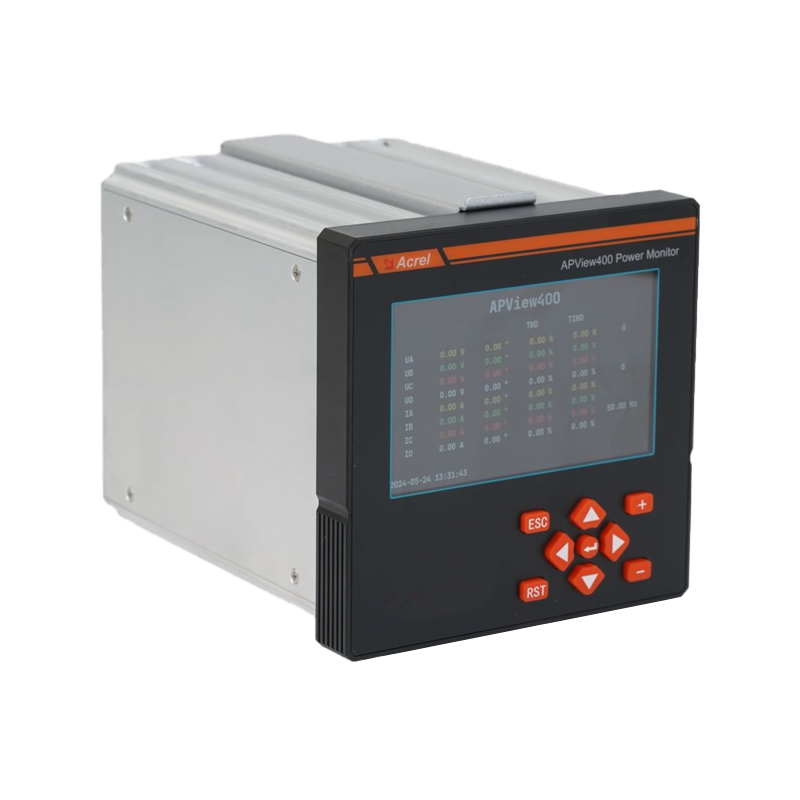 Part 1: Introduction 1.1 What is Power Quality and Why is it Important? In modern society, a stable ...View More
 -
Advancements and Applications of AC Energy Meters in Modern Power Management
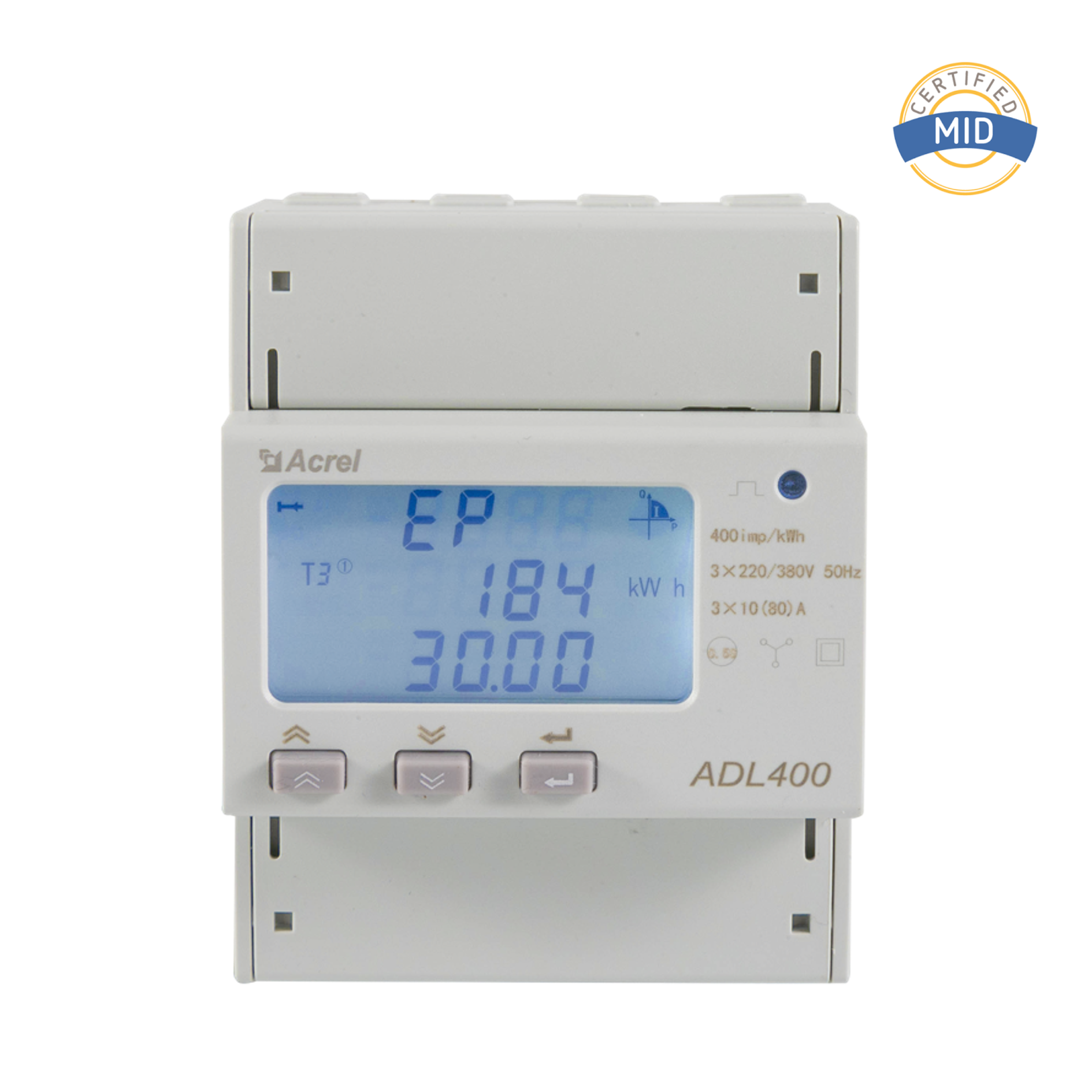 Introduction to AC Energy Meters In today’s rapidly evolving energy sector, accurate measurement and...View More
 -
What are the key differences between a basic thermal overload relay and a smart motor protection relay?
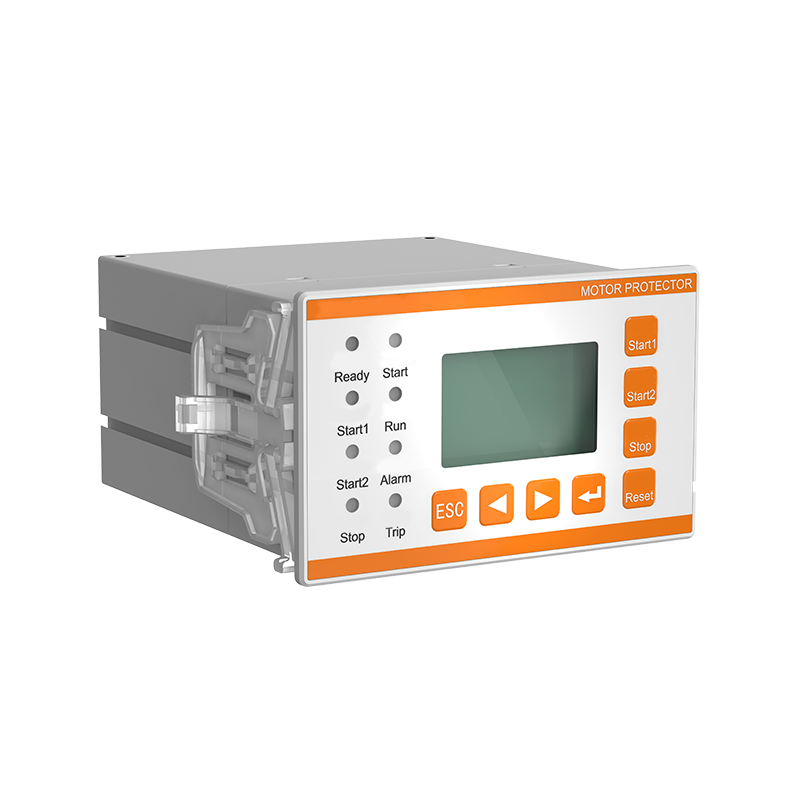 I. Introduction: The Critical Need for Motor Protection Electric motors are the undisputed workhorse...View More
 -
Precision and Versatility: Unlocking Efficiency with Panel Mount Multifunction Meters
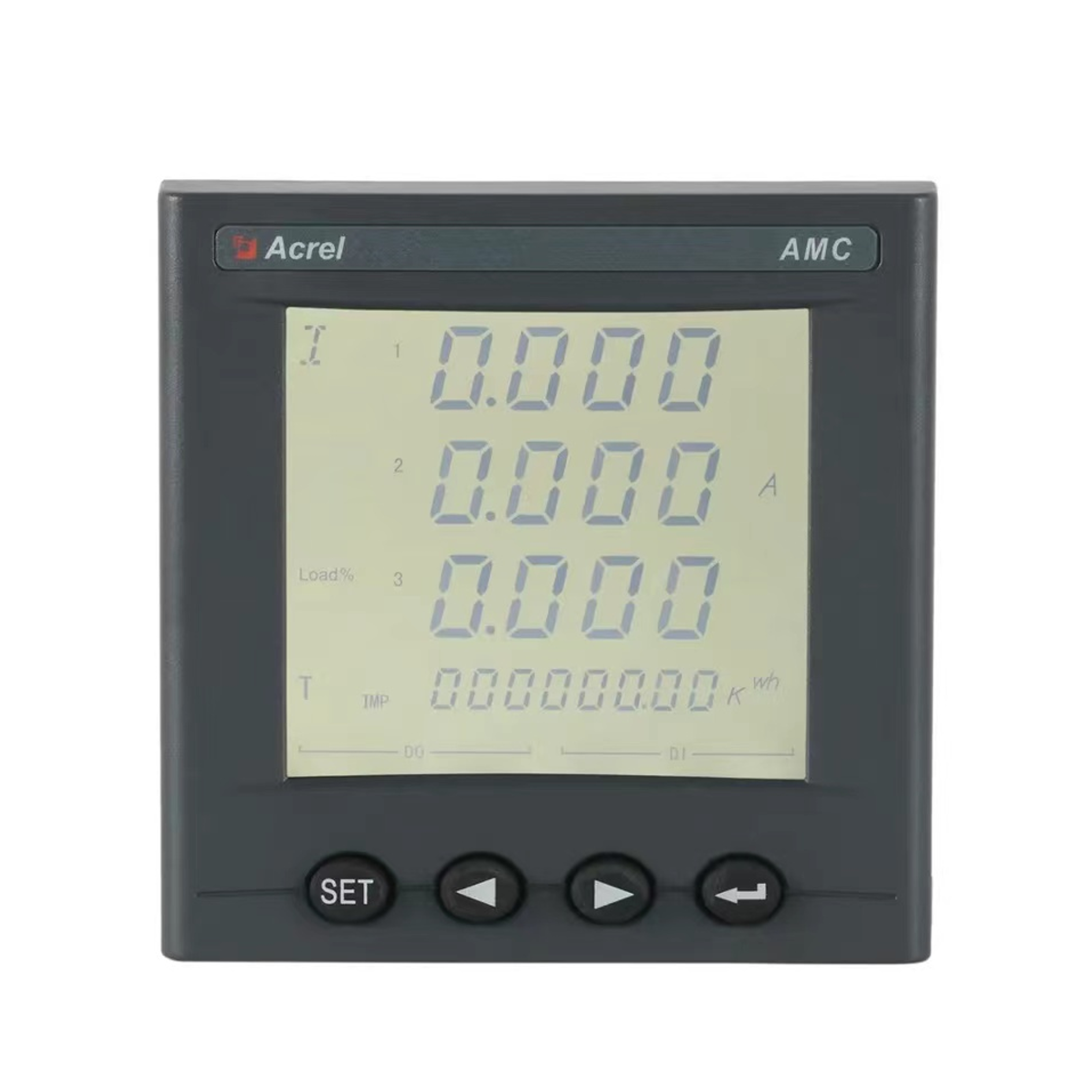 Introduction In modern industrial and commercial power environments, precise measurement and managem...View More

Get More Information about Acrel Solutions Right Now!

 Email: [email protected]
 Phone: +86-18702106858 / +86-21-69156352
ADDRESS
No.253 Yulv Road, Jiading District, Shanghai, PRC 201801


ABOUT US
PRODUCT
MOBILE TERMINAL



