What does the 3-Phase smart meter mean for the smart energy revolution?
3-Phase Smart Meters Are Central to the Smart Energy Revolution
The 3-phase smart meter is not simply an upgrade from analog gauges — it is a foundational component of the smart energy revolution. By enabling real-time, multi-channel energy monitoring across all three phases of an electrical system, these meters give facility managers, utilities, and industrial operators the data granularity they need to reduce waste, prevent faults, and support grid-level intelligence.
In practical terms, a 3-phase smart meter can detect phase imbalances that would otherwise go unnoticed for weeks, provide sub-interval consumption data for demand response programs, and integrate directly with building automation or SCADA systems. This is the infrastructure that makes "smart energy" more than a marketing term.
Why Three-Phase Monitoring Matters More Than Single-Phase
Most commercial buildings, manufacturing plants, and data centers operate on three-phase power. Monitoring only total consumption — or only one phase — misses critical imbalances. A phase imbalance of just 3.5% can reduce motor efficiency by up to 25%, leading to premature equipment failure and inflated energy bills.
Three-phase smart meters address this by independently tracking:
Voltage and current on each phase (L1, L2, L3)
Active power (kW), reactive power (kVAR), and apparent power (kVA) per phase
Power factor per phase and total
Total harmonic distortion (THD)
Cumulative energy consumption (kWh) with time-stamped logging
This level of visibility is impossible with single-phase meters or legacy analog equipment. For facilities spending $500,000 or more annually on electricity, even a 5% efficiency improvement translates to $25,000 in annual savings.
The Role of Split Core CTs in Non-Invasive Installation
One of the most significant practical barriers to energy metering upgrades in operational facilities is installation downtime. Traditional solid-core current transformers (CTs) require conductors to be de-energized and disconnected — a process that can take hours and disrupt operations.
Split core CTs eliminate this barrier entirely. Their hinged design allows them to clamp directly around existing conductors without cutting power or rewiring. For a typical 3-phase industrial panel, installation with split core CTs can be completed in under 30 minutes per circuit, compared to several hours with solid-core alternatives.
The UL Certified AC Three Phase Energy Meter with Split Core CTs exemplifies this approach — combining certified measurement accuracy with field-installable CTs that make retrofits practical in live environments such as hospitals, data centers, and continuous manufacturing lines.
Split Core CT Advantages at a Glance
Feature
Split Core CT
Solid Core CT
Installation downtime required
None
Yes (circuit must be de-energized)
Retrofit suitability
High
Low
Typical install time per phase
5–10 minutes
30–60 minutes
Accuracy class
0.5 – 1.0
0.2 – 0.5
Cost of installation labor
Low
High
What UL Certification Means for Energy Metering
UL (Underwriters Laboratories) certification is not just a compliance checkbox — it is a meaningful quality benchmark for energy meters deployed in commercial and industrial settings. A UL-certified three-phase energy meter has passed independently verified tests for:
Measurement accuracy — typically within ±0.5% or ±1.0% of true value across specified operating ranges
Electrical safety — including dielectric strength, insulation resistance, and protection against transient overvoltage
Environmental resilience — verified performance under temperature variation, humidity, and vibration
EMC compliance — ensuring the device does not emit interference or fail in the presence of electromagnetic noise
For facilities subject to energy audits, sustainability reporting (such as ISO 50001), or utility incentive programs, UL certification is often a prerequisite for meter data to be accepted as verifiable evidence. Non-certified meters may produce accurate readings in practice but cannot be used as the basis for compliance documentation or financial-grade energy accounting.
How 3-Phase Smart Meters Enable the Smart Energy Revolution in Practice
The "smart energy revolution" depends on a data layer — and 3-phase smart meters are a primary source of that data. Here is how they enable specific smart energy outcomes:
Demand Response Participation
Utilities and grid operators increasingly rely on demand response (DR) programs to balance loads during peak periods. Participation requires sub-15-minute interval metering data — something only smart meters can provide. Facilities with 3-phase smart meters can automatically reduce or shift loads in response to grid signals, earning incentive payments while stabilizing the grid.
Renewable Energy Integration
As solar and battery storage systems are added to facilities, 3-phase metering tracks import/export flows on each phase independently. This prevents single-phase oversupply — a scenario where one phase exports surplus solar energy while another imports from the grid simultaneously — which wastes energy and can increase net metering charges.
Predictive Maintenance Through Power Quality Data
Degrading motors, failing capacitors, and loose connections all produce detectable signatures in power quality metrics — particularly in THD readings and power factor trends. Smart meters that log these parameters over time enable maintenance teams to identify equipment issues weeks before failure, reducing unplanned downtime by 20–40% in documented industrial case studies.
Carbon Footprint Tracking and ESG Reporting
Accurate, time-stamped kWh data from 3-phase meters is the foundation of Scope 2 emissions calculations under GHG Protocol standards. With regulatory pressure increasing globally — including the EU Corporate Sustainability Reporting Directive (CSRD) requiring verified energy data — the metering infrastructure that supports ESG reporting is no longer optional for large organizations.
Key Specifications to Evaluate When Selecting a 3-Phase Smart Meter
Not all three-phase energy meters deliver the same value. When evaluating options, the following specifications have the most direct impact on performance and usability:
Accuracy class: Class 0.5 is standard for revenue-grade metering; Class 1.0 is acceptable for sub-metering and monitoring.
CT ratio compatibility: Ensure the meter supports the CT ratio appropriate for your load current range (e.g., 100:5A, 200:5A, 400:5A).
Communication protocol: Modbus RTU/TCP is the most widely supported for BMS and SCADA integration; DLMS/COSEM is preferred for utility-grade applications.
Data logging interval: 15-minute intervals are the minimum for demand response programs; 1-minute intervals are preferred for fault analysis.
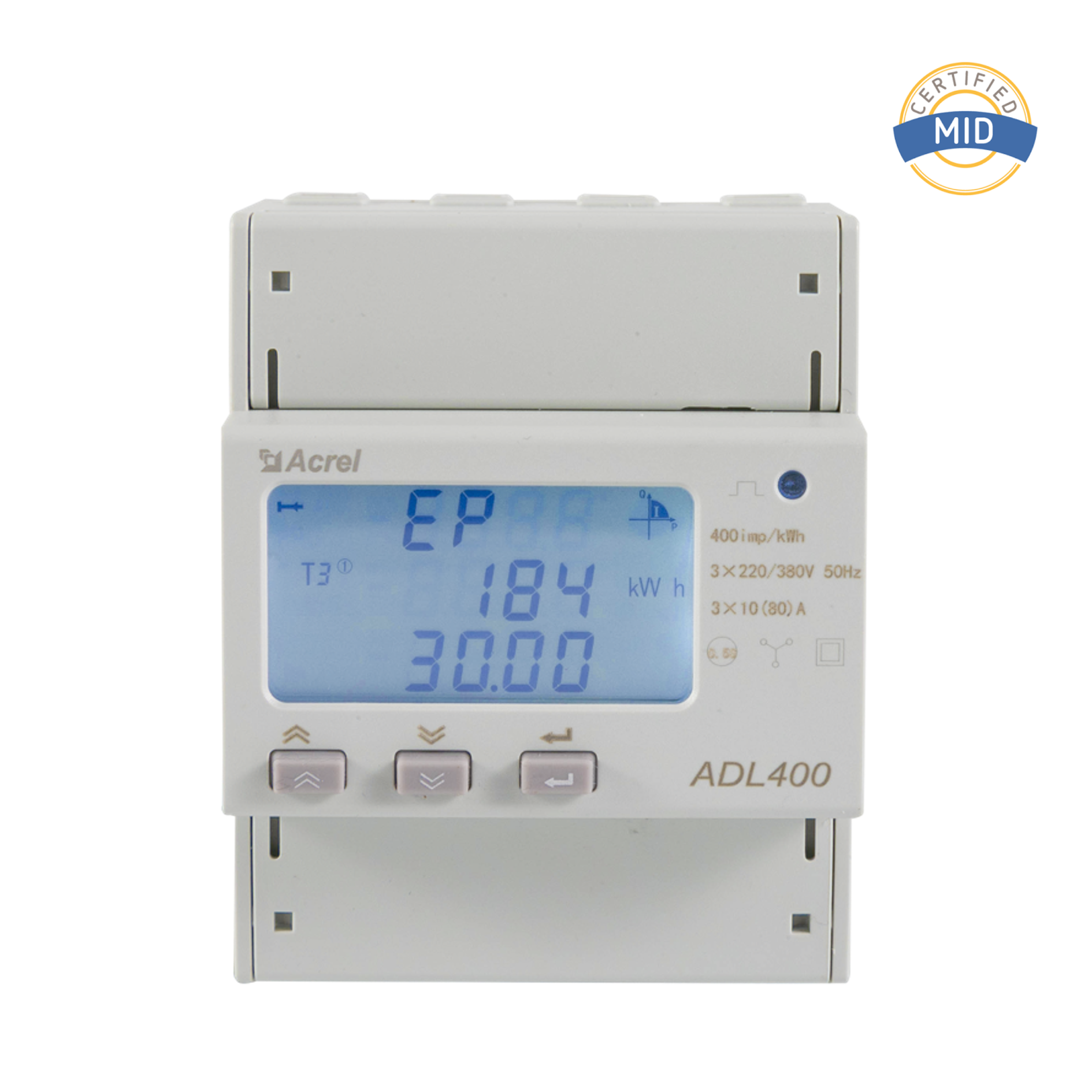
Certifications: UL listing for safety; MID certification if the meter data will be used for billing in regulated markets.
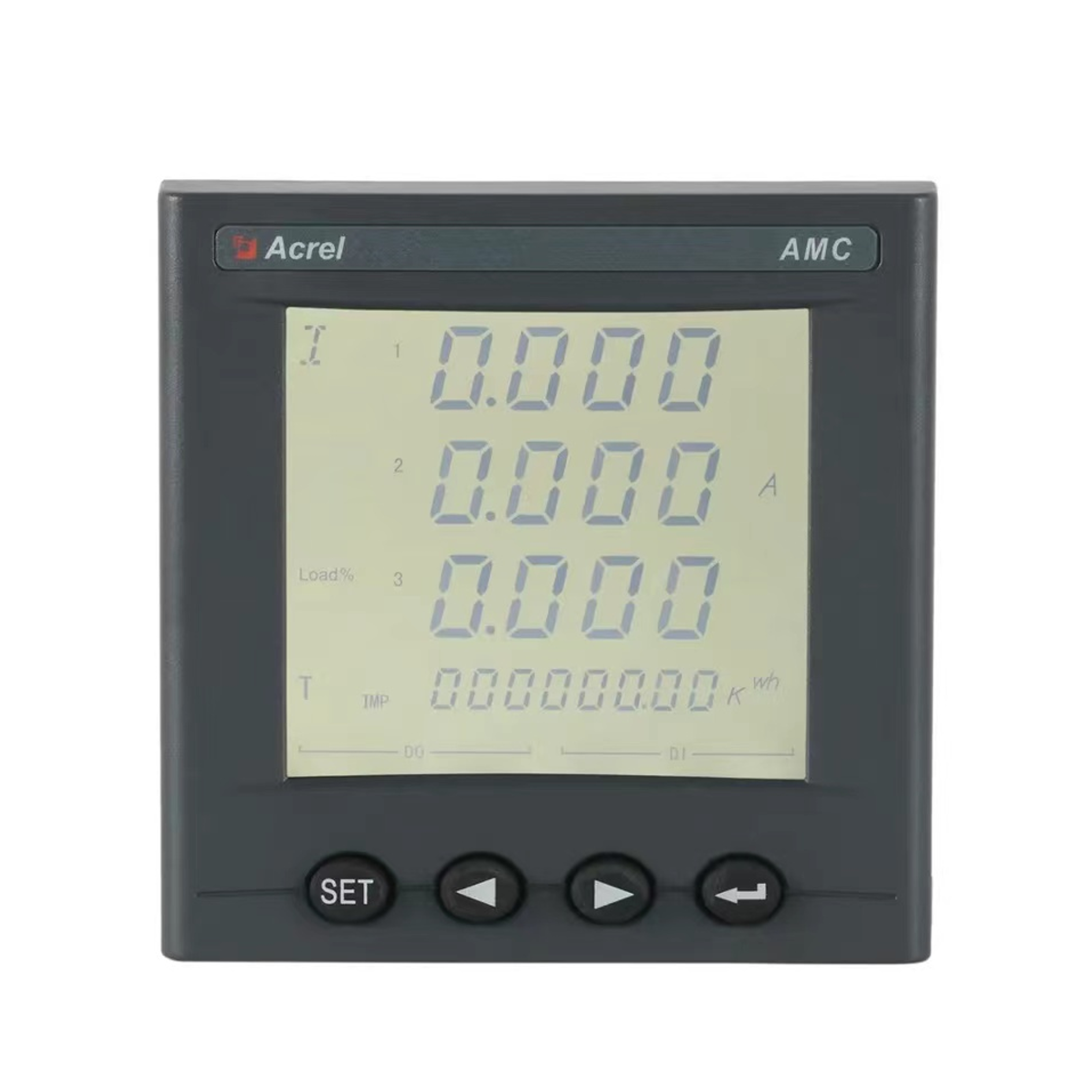
Display and local readout: An onboard LCD or LED display remains valuable for field verification during commissioning and troubleshooting.
Typical Applications Across Industries
3-phase smart meters with split core CTs are deployed across a wide range of sectors where three-phase power is standard:
Industry
Primary Use Case
Key Benefit
Manufacturing
Machine-level sub-metering
OEE improvement, energy cost allocation
Commercial Real Estate
Tenant sub-metering
Accurate billing, LEED compliance support
Data Centers
PUE (Power Usage Effectiveness) monitoring
Efficiency benchmarking, capacity planning
Healthcare
Critical circuit monitoring
Uptime assurance, regulatory compliance
Utilities / Microgrids
Grid interconnect metering
Demand response, settlement metering
Education Campuses
Building-level energy tracking
Sustainability reporting, budget management
FAQ
Q1: What is the difference between a 3-phase smart meter and a standard 3-phase meter?
A standard 3-phase meter records cumulative kWh only. A smart meter also logs interval data, power quality parameters (voltage, current, power factor, THD), and transmits data digitally via protocols like Modbus — enabling real-time monitoring, automation, and analytics.
Q2: Do split core CTs affect measurement accuracy compared to solid core CTs?
Split core CTs are slightly less accurate than solid core equivalents at the same price point, but high-quality split core CTs still achieve Class 0.5 or Class 1.0 accuracy — sufficient for sub-metering, demand response, and most ESG reporting applications.
Q3: Is UL certification required for all energy meter installations?
UL certification is legally required in many jurisdictions for meters installed in commercial and industrial electrical panels. It is also a prerequisite for utility incentive programs and financial-grade energy audits in the US market.
Q4: Can a 3-phase smart meter be installed without shutting down power?
Yes — when the meter uses split core CTs. The CTs clamp around live conductors without disconnecting them. The voltage input connections still require standard electrical safety precautions, but the current measurement side is fully non-invasive.
Q5: What communication interfaces do 3-phase smart meters typically support?
The most common interfaces are Modbus RTU (RS-485), Modbus TCP (Ethernet), and pulse output. Some advanced models also support BACnet, PROFIBUS, or wireless protocols such as Zigbee and LoRaWAN for IoT integration.
Q6: How often should a 3-phase smart meter be calibrated?
For revenue-grade or regulatory applications, calibration is typically required every 5–10 years depending on jurisdiction. For sub-metering and monitoring applications, manufacturers generally recommend verification every 5 years or after any significant electrical event such as a surge or short circuit.
Q7: Can 3-phase smart meters support net metering for solar installations?
Yes. Bidirectional 3-phase smart meters measure both import (grid consumption) and export (solar generation) on each phase independently, which is essential for accurate net metering calculations and avoiding phase-level energy mismatches in solar-plus-storage systems.


 English
 Deutsch


 Email: [email protected]
 Phone: +86-18702106858 / +86-21-69156352




