

 English
 Deutsch
News
Home / News / Industry News / How to Choose Between DIN Rail and Panel Mounted Energy Meters for Your Control Panel
Choosing between a DIN rail mounted unit and a panel mounted unit is rarely a trivial detail on a project drawing. The decision affects how much space is left inside an enclosure, how technicians will read data during maintenance, how wiring is routed, and how easily the device integrates with a building management system later on. An energy meter that looks identical to another on a datasheet can behave very differently once it is actually seated inside a crowded cabinet or mounted flush on a switchgear door.
This guide walks through the practical differences between the two mounting formats, the technical specifications worth checking before purchase, and a structured way to match meter type to application. The goal is to help engineers, panel builders, and facility managers avoid rework caused by a mismatched form factor or an underspecified communication interface.
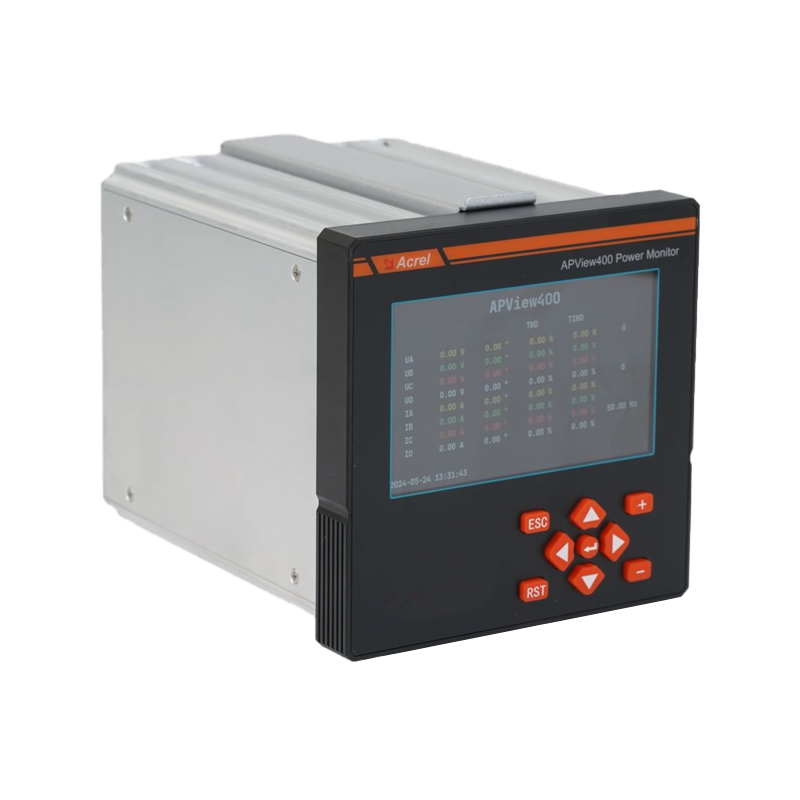
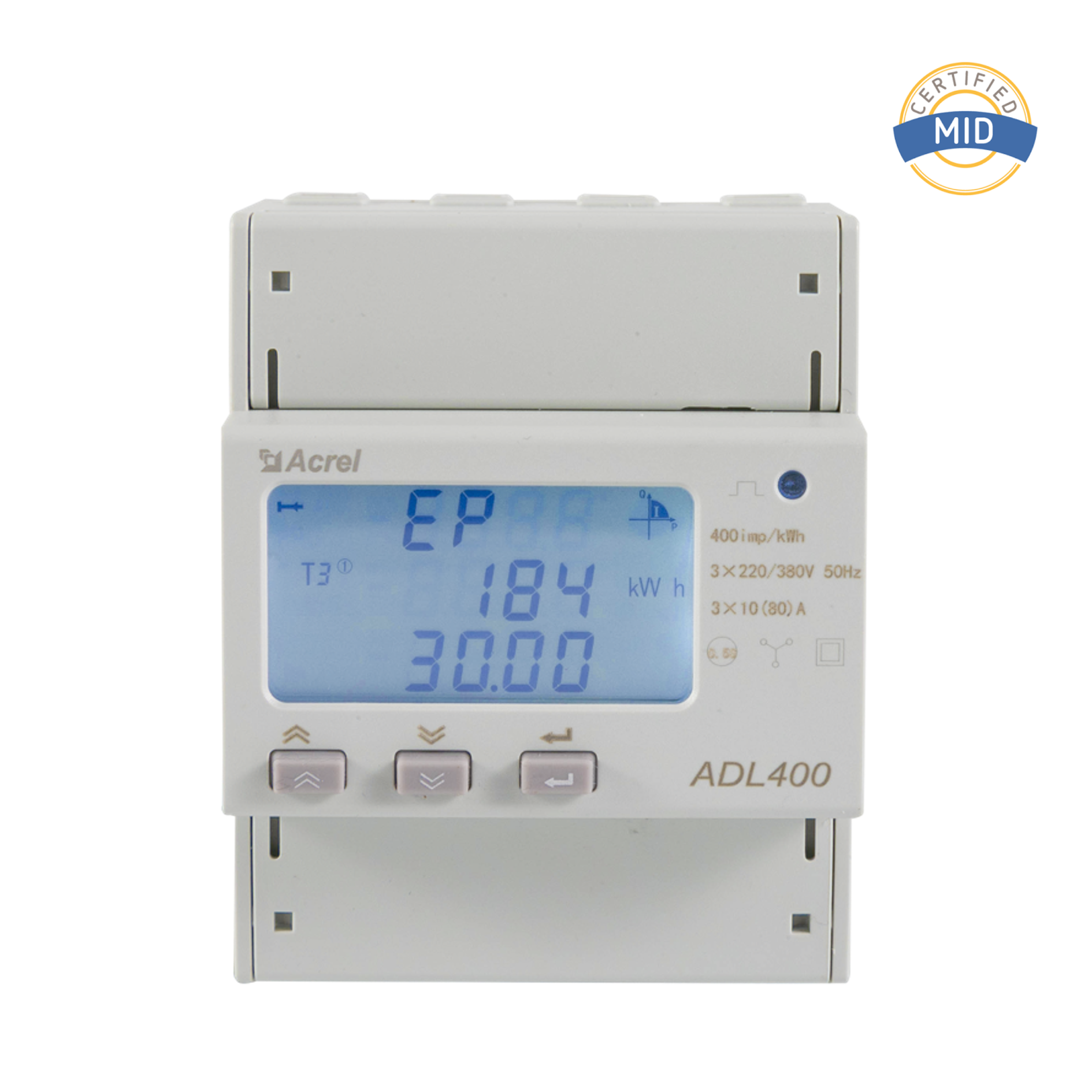
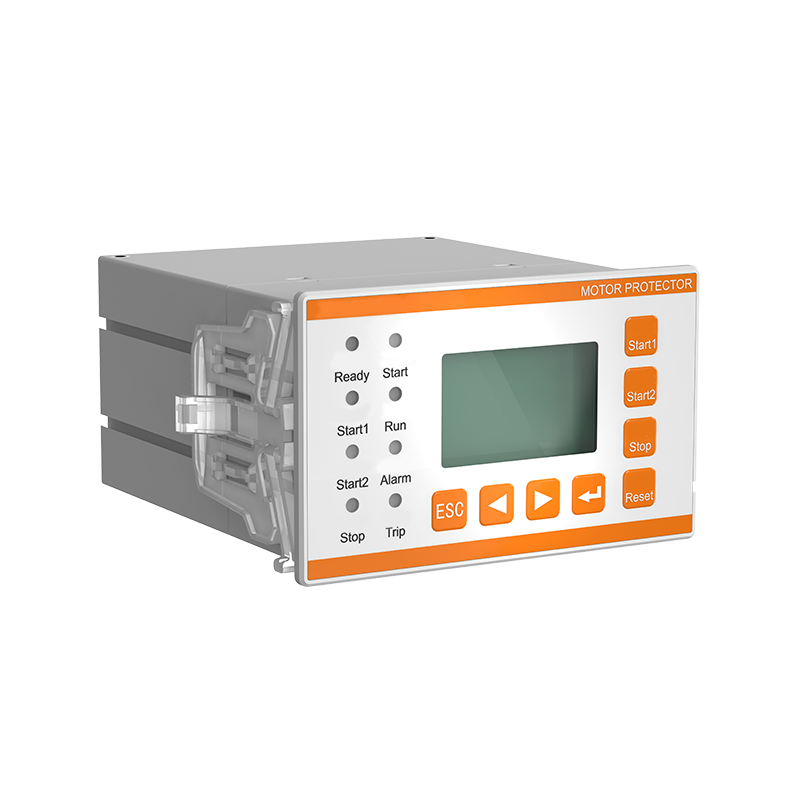
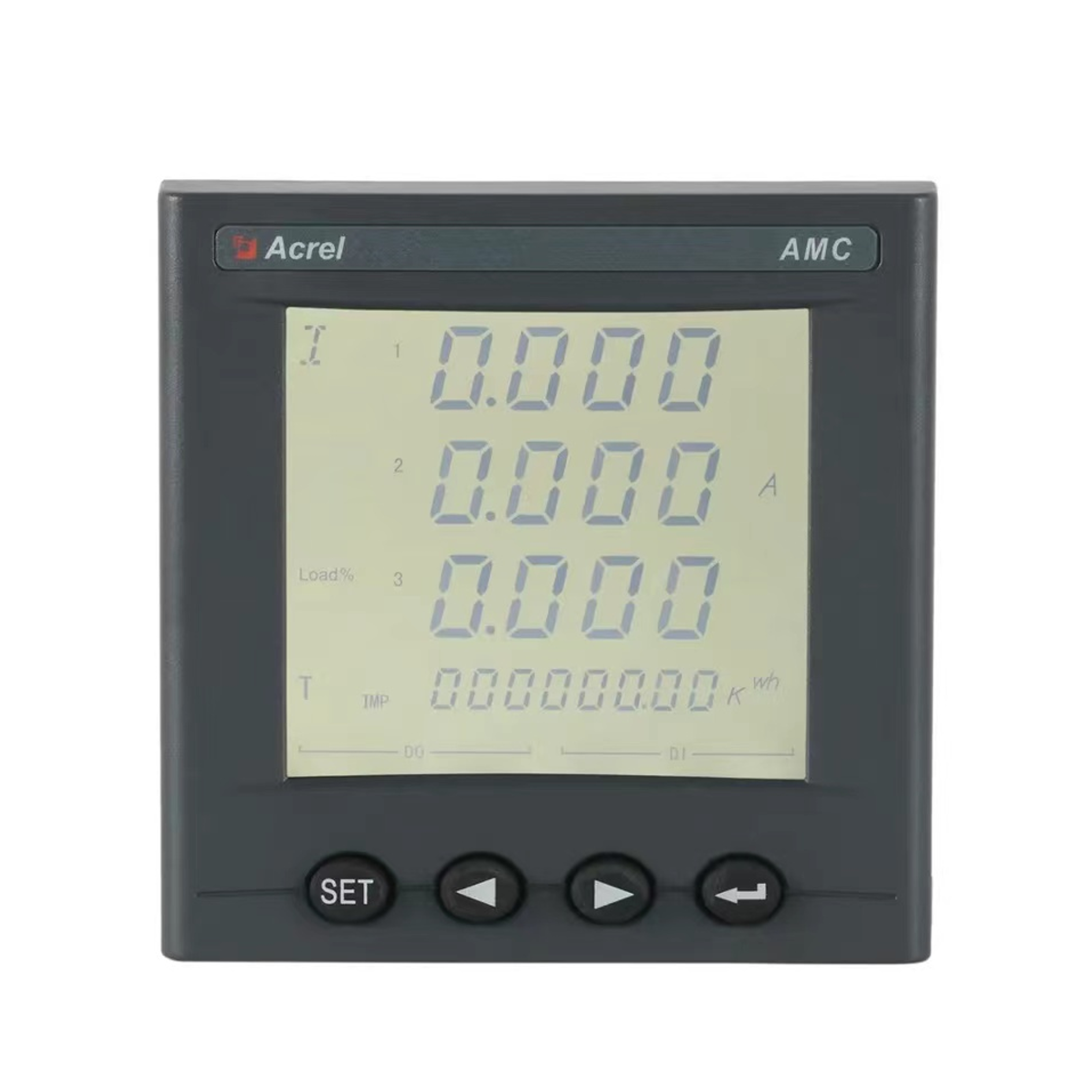
Both formats measure the same electrical parameters, but they are built for different physical contexts. A DIN rail energy meter clips directly onto a standard 35 millimeter rail inside an enclosure, sitting alongside breakers, contactors, and terminal blocks. A panel mounted energy meter is designed to be cut into a door or front plate, with its display facing outward so operators can read values without opening the cabinet.
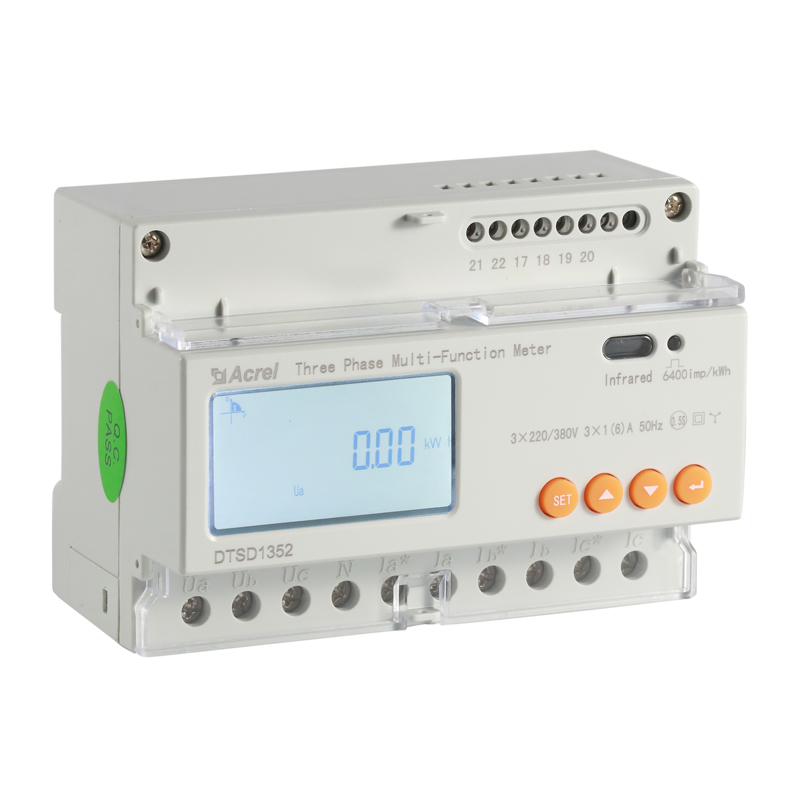
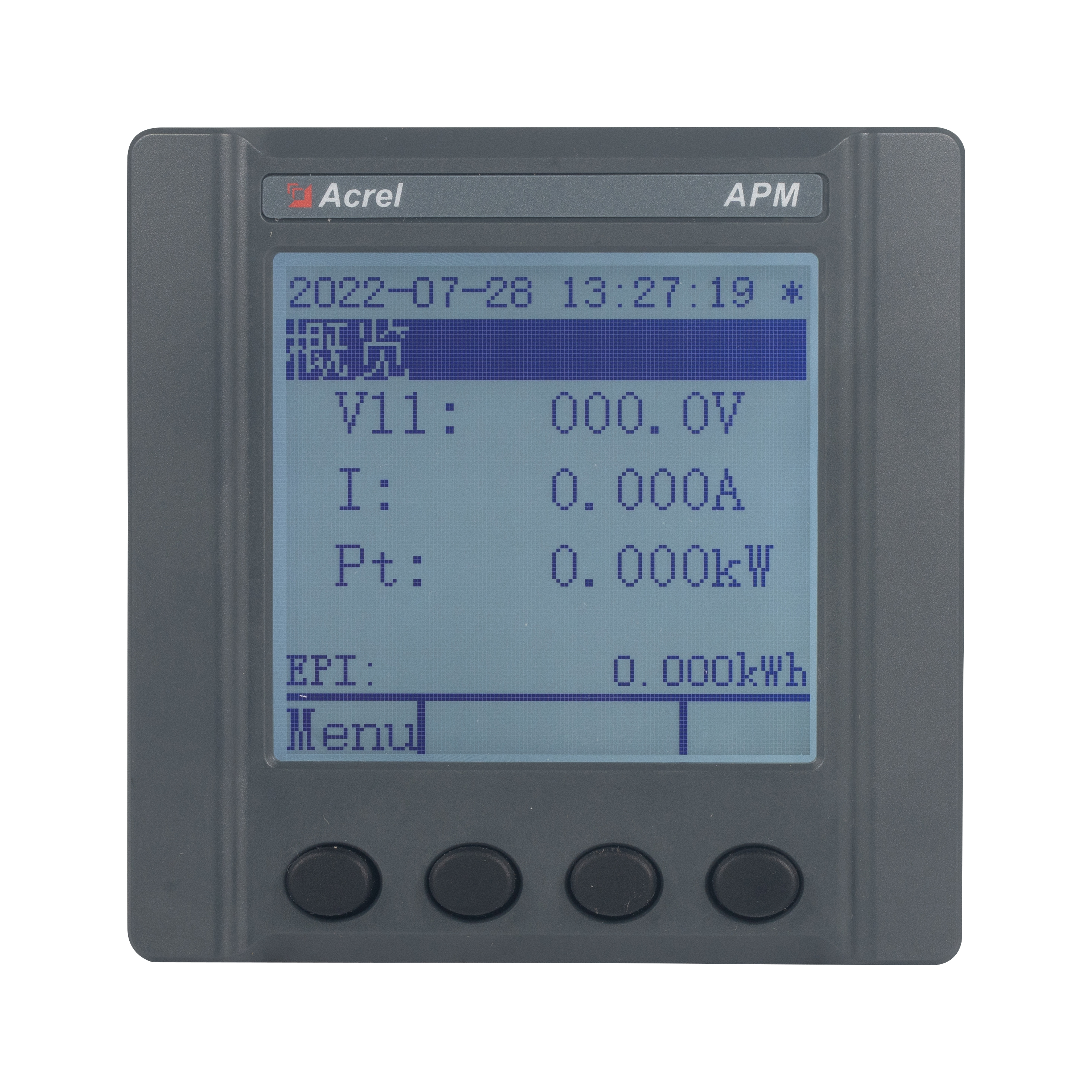
| Attribute | DIN Rail Format | Panel Mounted Format |
|---|---|---|
| Mounting location | Inside the enclosure, on 35mm rail | Cut into a door or front plate |
| Display visibility | Requires opening the cabinet | Visible without opening the cabinet |
| Typical enclosure depth needed | Shallow, compact footprint | Depends on device body length behind the cutout |
| Common use case | Sub-metering, feeder circuits, retrofit projects | Main incoming supply, operator dashboards, control rooms |
| Wiring access | Front or side terminal access | Rear terminal access, wired from behind the door |
In practice, many panel builders combine both formats within a single project. Compact DIN rail metering handles distributed sub-circuit monitoring where space is tight, while a panel mounted unit is reserved for the main incoming feed or for any point where an operator needs an at-a-glance reading. Understanding din rail mount energy meters and analyzers as a category also helps when planning multi-circuit monitoring, since several units can be clipped side by side along the same rail without consuming door space.
A datasheet comparison is only useful if the right rows are being compared. The following specifications tend to have the most practical impact on whether a meter performs well in its intended location.
Accuracy class determines how closely displayed values track the actual load. Sub-metering for internal cost allocation typically tolerates a wider class than billing-grade or revenue metering, where tighter classes are expected.
Confirm the rated voltage matches the system (single phase or three phase, and the nominal line voltage), and that current transformer ratios or direct connection current ranges match the expected load profile, including peak conditions.
Direct connection units handle lower currents without external transformers, while CT-connected units extend the usable range for larger feeders. Mixing the wrong connection method with a given load range is a common source of underreading or overreading.
Panel mounted units benefit from larger, higher-contrast displays since they are read from a distance. DIN rail units are usually read up close during maintenance, so a smaller display with menu navigation is acceptable.
Whether the meter needs to report into a building management system or an energy dashboard determines what interface is required, discussed further below.
Units mounted inside a sealed cabinet typically need a lower ingress protection rating than units mounted on an exposed door facing a workshop floor or outdoor environment.
For reference, the chart below illustrates how different accuracy classes translate into relative measurement tolerance, which is useful when specifying high-precision panel instrumentation for critical loads versus general sub-metering.
Rather than choosing a format based on habit, it helps to work through the application first. The table below summarizes typical pairings seen in commercial and industrial projects when planning energy meter selection for control panels.
| Application | Recommended Format | Reasoning |
|---|---|---|
| Tenant sub-metering in a shared building | DIN rail | Multiple units clip along one rail, saving door space across many circuits |
| Main incoming supply monitoring | Panel mounted | Operators need a direct readout without opening the cabinet |
| Retrofit into an existing crowded cabinet | DIN rail | Compact footprint fits into remaining rail space without door modification |
| Control room dashboards | Panel mounted | Large display supports quick visual checks by control room staff |
| Machine or equipment level monitoring | DIN rail | Integrates alongside other rail-mounted control components near the load |
A useful rule of thumb: if the value needs to be read by someone standing outside the cabinet, lean toward panel mounted. If the value is mainly logged and reviewed remotely, DIN rail is usually the more space-efficient choice.
Regardless of format, installation quality has a direct effect on measurement reliability. The sequence below outlines a practical installation guide for energy meters used in most control panel projects.
Most modern digital energy meters offer some form of data output beyond the local display, which matters once a facility wants to centralize monitoring across multiple panels.
| Integration Need | Typical Interface Consideration |
|---|---|
| Standalone local reading only | No communication module required, display readout is sufficient |
| Central energy management system | Serial or network-based communication with a defined register map |
| Mixed legacy and new equipment | Gateway or protocol converter may be needed to unify data formats |
| Remote alarm or threshold notification | Meter with configurable output relays or alarm registers |
When specifying panel mount energy meters and analyzers for a larger site, it is worth confirming in advance how many devices the intended monitoring platform can poll simultaneously, since this affects how addresses and communication settings should be planned during commissioning rather than discovered afterward.
The core difference is physical placement. A DIN rail unit clips onto rail inside an enclosure and is typically read during maintenance, while a panel mounted unit sits on a door or front plate so its display is visible without opening the cabinet.
Yes, this is common. Panel mounted units are often used for main incoming supply visibility, while DIN rail units handle distributed sub-metering across multiple feeders within the same installation.
Consider what the data will be used for. General load monitoring can typically use a wider tolerance class, while circuits tied to billing, cost allocation, or contractual reporting usually call for a tighter accuracy class.
Not always. Some panel mounted units support direct connection for lower current ranges, while higher current feeders typically require external current transformers matched to the expected load.
Start by confirming the voltage system, expected load range, and connection method, since these determine both the correct meter rating and whether a DIN rail or panel mounted format will physically fit the intended location.


 Email: [email protected]
 Phone: +86-18702106858 / +86-21-69156352
No.253 Yulv Road, Jiading District, Shanghai, PRC 201801





