

 English
 Deutsch
News
Home / News / Industry News / How Wireless IoT Energy Meters and Smart Gateways Are Rebuilding the Modern Grid
Utilities and facility managers have spent the last decade adding sensors, automation, and analytics to their networks, yet many still rely on a metering layer that was designed for a different era. Walk-by readings, monthly billing cycles, and isolated panels create blind spots that make it nearly impossible to react to load changes in real time. When a transformer is overloaded or a tenant's circuit trips at 2 a.m., a system built around manual data collection simply cannot respond fast enough.
Modern grids need metering infrastructure that behaves less like a passive recording device and more like a live sensor network. That shift is exactly what wireless metering hardware paired with intelligent gateways and purpose-built software is designed to deliver. Instead of a technician walking a route once a month, thousands of measurement points can report voltage, current, power factor, and energy consumption every few seconds, feeding a platform that turns raw numbers into operational decisions.
This article breaks down the three layers that make this possible: the measurement device at the edge, the gateway that aggregates and translates protocols, and the software platform that stores, visualizes, and acts on the data. Along the way we will look at deployment patterns, protocol choices, and practical planning considerations for teams building out a metering network.
A wireless iot energy meter is fundamentally a measurement instrument with a radio attached, but the engineering behind that simple description matters. At its core it samples voltage and current waveforms at high frequency, calculates active, reactive, and apparent power, and stores interval data locally before transmitting it wirelessly to a nearby collection point. Because the device does not depend on a hardwired data cable, it can be installed in locations where running conduit would be expensive or physically impractical: rooftop distribution panels, remote pump houses, parking structure sub-panels, or retrofit projects inside finished buildings.
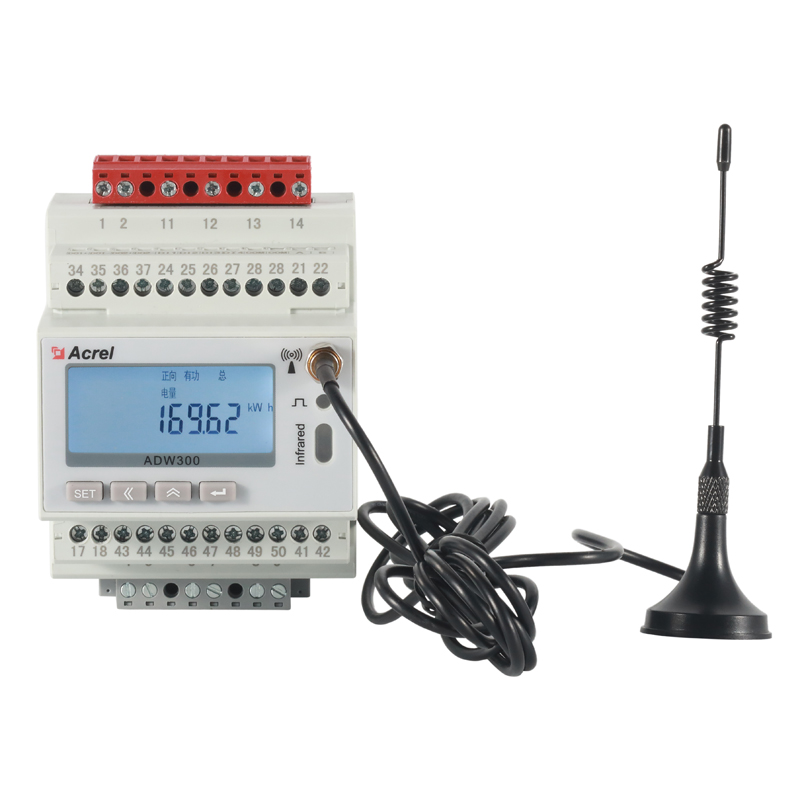
Three characteristics separate a purpose-built wireless energy meter from a generic sensor with a radio bolted on:
In a mid-size commercial retrofit, replacing a walk-by reading routine with wireless interval metering typically cuts the labor hours spent on manual data collection by more than 80 percent, while increasing reading frequency from monthly to every few minutes.
The chart below illustrates the practical time difference between three common meter reading approaches for a single reading cycle across a mid-size facility with roughly 40 metering points.
A single meter reporting to a phone app is a novelty. Hundreds of meters spread across a campus, a multi-tenant tower, or a distribution feeder require an aggregation point that can talk to every device using its native language and then re-package that information into something a central platform can consume. That is the job of a smart gateway.
A gateway performs four distinct functions inside a metering network, and it is worth separating them because each one affects a different part of the deployment plan:
| Function | What It Does | Why It Matters |
|---|---|---|
| Protocol Bridging | Converts serial field protocols to network-based protocols | Lets legacy field devices reach cloud or on-premise software without rewiring |
| Local Aggregation | Polls dozens or hundreds of meters on a schedule | Reduces the number of devices that need direct internet access |
| Buffering and Store-and-Forward | Holds interval data during a network outage | Prevents billing or analytics gaps caused by short connectivity drops |
| Edge Filtering | Screens out duplicate or out-of-range readings | Reduces noise reaching the software layer and lowers data transmission volume |
The diagram below shows the typical data path from a meter at the edge to a dashboard used by an operations team. Each stage adds a specific piece of value: raw measurement, protocol translation, storage, and finally interpretation.
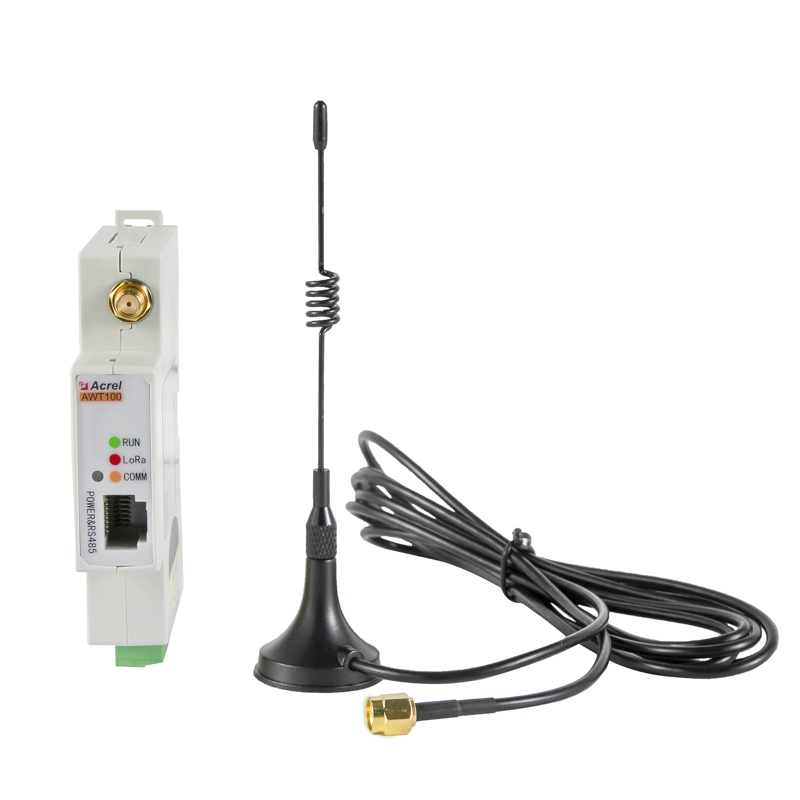
Most energy meters in the field still speak Modbus RTU over an RS485 serial bus, a protocol that is rock solid for short-distance wiring inside a switchboard but was never meant to travel across a building or reach a cloud endpoint. This is where an awt100 smart gateway earns its place in the architecture: it terminates the RS485 chain locally, polls each meter on the bus, and republishes that data over Ethernet or wireless uplink using a protocol the software layer already understands, such as Modbus TCP or MQTT.
Because RS485 to Ethernet for power monitoring is one of the most common conversion needs in retrofit projects, gateway selection deserves attention. Key factors to evaluate include:
RS485 Channel Count Baud Rate Range Polling Interval Store-and-Forward Buffer Size Concurrent Protocol SupportThe column chart below compares the typical number of connected end devices supported per connection type on a mid-range gateway, illustrating why hybrid connectivity matters in mixed-vintage installations.
Hardware collects the numbers; energy metering software is what turns those numbers into decisions. A capable platform needs to handle three separate workloads at once: ingesting high-frequency interval data without dropping records, storing years of history in a way that stays queryable, and presenting that history in views that different users can actually act on. A facility engineer wants a real-time load view, a finance team wants tenant-level billing exports, and a sustainability team wants aggregated carbon and consumption trends.
A well-designed energy metering system typically organizes functionality into these layers:
| Layer | Primary Task |
|---|---|
| Ingestion | Accept data from gateways, validate timestamps, handle duplicate suppression |
| Storage | Time-series database structured for interval and aggregate queries |
| Rules and Alarms | Threshold, demand, and anomaly-based notifications |
| Reporting | Billing exports, sub-metering allocation, regulatory reports |
| Visualization | Dashboards, trend charts, comparative views across sites |
The line chart below shows a simplified 12-month consumption trend as it might appear inside a metering dashboard, useful for spotting seasonal load shifts or the impact of an efficiency initiative introduced mid-year.
Two architectural patterns dominate real-world deployments. In a point-to-point model, each meter connects individually back to a controller or head-end device, usually over a dedicated cable run. In a gateway-aggregated model, clusters of meters connect locally, either through a shared RS485 bus or a wireless mesh, and a gateway consolidates that traffic before it reaches the software layer.
The radar chart below compares the two models across five practical dimensions that matter during project planning: installation speed, cost efficiency, scalability, maintenance ease, and data latency.
The comparison makes the trade-off clear. Point-to-point wiring can still make sense for a handful of critical loads where a dedicated, uncontended cable run is worth the added labor. For anything beyond a small number of points, gateway-aggregated networks scale far more efficiently, largely because the marginal cost of adding one more meter is a short local wiring or wireless pairing task rather than a new long-distance cable run.
Smart building energy management projects tend to fall into recognizable patterns depending on the type of facility. In multi-tenant office towers, sub-metering is often deployed floor by floor, with one gateway per electrical closet aggregating all tenant panels on that level. In industrial campuses, metering is frequently organized by process line or by building, with gateways placed near main distribution boards to keep RS485 runs short. In distributed portfolios such as retail chains, wireless meters paired with cellular-uplink gateways avoid the need for site-specific network infrastructure entirely.
Across these patterns, a few planning principles consistently reduce project risk:
IoT-based power monitoring becomes noticeably more valuable once data from multiple buildings or zones can be compared side by side. A facilities team managing several sites can rank buildings by load factor, identify outlier consumption patterns, and prioritize retrofit spending based on actual measured waste rather than assumptions from utility bills alone.
Before ordering hardware, it helps to walk through a short planning checklist that catches the most common early mistakes:
Teams that treat metering as infrastructure, rather than as an afterthought bolted onto existing panels, consistently get more value out of the resulting data. The hardware and software described above are only useful if the underlying network topology and data model were planned with the end use case in mind from the start.
A standard digital meter measures and displays energy data locally, often requiring a technician to read it manually or connect a laptop. A wireless IoT energy meter adds onboard radio communication, local buffering, and the ability to report interval data automatically to a gateway or software platform without a wired connection.
RS485 is inexpensive, robust over long distances within a facility, and tolerant of electrical noise near switchgear, which makes it well suited for short-range communication with metering hardware. A gateway that bridges RS485 to Ethernet lets that reliable field-level connection reach modern network-based software without replacing the meters themselves.
This depends on the number of RS485 channels, wireless capacity, and polling interval configured on the gateway, but many mid-range gateways comfortably support dozens of serial devices per channel and dozens more wireless sub-nodes, particularly when polling intervals are set to align with the reporting frequency actually needed.
Wireless links add an additional communication surface, so encryption, authenticated pairing, and network segmentation between the metering network and general IT infrastructure are standard mitigations. A properly configured gateway isolates field-level traffic and only exposes a controlled, authenticated channel to the software platform.
Yes. Most energy metering systems are protocol-agnostic at the software layer, and gateways that support concurrent RS485 and wireless channels can aggregate both meter types into the same dataset, which is common during phased retrofit projects.
Point-to-point wired connections can offer marginally lower latency per device, but gateway-aggregated networks generally deliver acceptable latency for most operational use cases while adding significant gains in installation speed and scalability, as shown in the comparison earlier in this article.


 Email: [email protected]
 Phone: +86-18702106858 / +86-21-69156352
No.253 Yulv Road, Jiading District, Shanghai, PRC 201801





