Can anyone recommend an affordable power monitoring
Understanding DIN Rail Energy Meters for Cost-Effective Power Monitoring
Power monitoring has become an essential requirement for both industrial facilities and residential applications seeking to optimize energy consumption and reduce operational costs. Among the various metering solutions available, DIN rail energy meter devices have emerged as one of the most practical and affordable options for accurate electrical measurement. These compact devices mount directly onto standard DIN rails, making installation straightforward and eliminating the need for complex wiring configurations or dedicated enclosure modifications.
The global push toward energy efficiency has driven significant advancements in metering technology while simultaneously reducing costs. Modern DIN rail meters now offer capabilities that were once exclusive to high-end industrial equipment, including real-time data logging, communication protocols for remote monitoring, and multi-parameter measurement. For facility managers and homeowners alike, understanding the capabilities and selection criteria for these devices is crucial to implementing an effective power monitoring strategy without exceeding budget constraints.
Key Features That Define Quality DIN Rail Energy Meters
Measurement Accuracy and Parameters
When evaluating affordable power monitoring solutions, measurement accuracy remains the primary consideration. Quality DIN rail energy meters typically achieve accuracy classes of 0.5S or 1.0, meaning they maintain precision within 0.5% or 1% of the actual power consumption. This level of accuracy is sufficient for most commercial and industrial billing applications while remaining cost-effective compared to laboratory-grade instruments that may cost ten times as much.
Comprehensive parameter measurement extends beyond simple kilowatt-hour counting. Advanced units monitor voltage, current, active power, reactive power, power factor, frequency, and harmonic distortion. This multi-parameter capability enables users to identify power quality issues, detect inefficiencies, and implement corrective measures before they result in equipment damage or excessive energy costs.
Communication and Connectivity Options
Modern energy management requires data accessibility. Entry-level DIN rail meters often include pulse outputs for basic integration with building management systems. Mid-range models feature RS485 communication ports supporting Modbus RTU protocol, allowing connection to supervisory control and data acquisition systems. Higher-tier affordable options now incorporate Ethernet connectivity, WiFi capabilities, or support for IoT cloud platforms, enabling remote monitoring via web interfaces or mobile applications.
The selection of communication features should align with existing infrastructure and future expansion plans. Facilities with established Modbus networks benefit from meters supporting this protocol, while newer installations might prioritize devices with native cloud connectivity to minimize gateway hardware requirements.
Physical Specifications and Installation Requirements
Standard DIN rail mounting follows IEC 60715 specifications, ensuring compatibility with electrical panels worldwide. Most energy meters occupy 4 to 7 modular widths (each module being 18mm), allowing flexible panel layout designs. Voltage ratings typically span 230V to 400V for three-phase applications, with current transformer inputs accommodating primary currents from 5A to 6000A depending on the model.
Environmental considerations include operating temperature ranges, typically -25°C to +55°C for standard models, and protection ratings. IP20 protection suits indoor panel installations, while some variants offer enhanced protection for challenging industrial environments. Display options range from basic LCD screens showing cumulative consumption to backlit graphical displays presenting real-time waveforms and historical data trends.
Applications Across Different Sectors
Industrial Manufacturing Facilities
Manufacturing operations consume substantial electrical energy, with motor-driven equipment, heating processes, and lighting systems contributing to overall consumption. Installing DIN rail energy meters at distribution panel levels enables granular tracking of energy usage by production line, shift, or specific equipment. This segmentation reveals consumption patterns and identifies opportunities for load scheduling, power factor correction, or equipment upgrades.
A typical mid-sized manufacturing facility might deploy 20 to 50 monitoring points across production areas, achieving payback periods of 12 to 18 months through identified energy savings alone. The affordability of modern DIN rail meters makes such comprehensive monitoring economically viable compared to the limited visibility provided by single utility-grade meters.
Commercial Buildings and Retail Spaces
Office buildings, shopping centers, and retail stores face increasing pressure to demonstrate sustainability credentials while controlling operating costs. Sub-metering using DIN rail devices allows property managers to allocate energy costs accurately among tenants, verify utility billing accuracy, and benchmark consumption against similar facilities.
HVAC systems typically account for 40% to 60% of commercial building energy consumption. Dedicated metering of chiller plants, air handling units, and distribution pumps provides the data necessary to optimize setpoints, detect maintenance issues, and evaluate the return on investment for equipment upgrades. Lighting circuits, often representing 15% to 25% of consumption, similarly benefit from monitoring to validate the effectiveness of LED retrofits or daylight harvesting controls.
Residential and Multi-Family Housing
Homeowners and property managers increasingly seek visibility into residential energy consumption. DIN rail meters sized for single-phase applications provide whole-house monitoring or circuit-level tracking for high-consumption appliances such as electric vehicle chargers, heat pumps, or pool equipment. The compact form factor fits standard residential electrical panels without requiring extensive modifications.
For multi-family dwellings, individual unit metering supports fair cost allocation and encourages conservation behaviors among residents. Modern meters with remote reading capabilities eliminate the need for manual meter reading while providing property managers with tools to detect anomalies such as excessive consumption or potential electrical faults.
Renewable Energy and Microgrid Applications
Solar photovoltaic installations, battery storage systems, and microgrids require bidirectional metering capabilities to track energy generation, consumption, and grid exchange. Specialized DIN rail meters designed for renewable applications measure both import and export energy flows, enabling accurate performance monitoring and compliance with net metering regulations.
Microgrid controllers rely on multiple metering points to balance generation and load, manage battery charge cycles, and optimize energy costs. The scalability and cost-effectiveness of DIN rail meters make them ideal for distributed monitoring architectures where numerous measurement points provide the situational awareness necessary for intelligent energy management.
Installation Best Practices and Technical Considerations
Current Transformer Selection and Wiring
Most DIN rail energy meters for medium to high current applications utilize external current transformers (CTs) rather than direct connection. Proper CT selection requires matching the primary current rating to the expected load while providing sufficient headroom for future expansion. Standard practice recommends selecting CTs rated at 120% to 150% of the maximum expected load current to maintain accuracy across the operating range while accommodating temporary overloads.
CT installation requires attention to polarity, with the primary current direction marked on the transformer body. Reversed polarity results in negative power readings or incorrect power factor calculations. Secondary wiring should use twisted pair cables of adequate gauge, typically 1.5mm² to 2.5mm², with proper grounding of one secondary terminal to prevent hazardous voltages from developing under fault conditions.
Voltage Connection and Phase Identification
Three-phase meters require correct phase sequence for accurate power measurement. While many modern meters tolerate reversed phase rotation, proper identification of phases L1, L2, and L3 ensures consistent readings and simplifies troubleshooting. Voltage connections must incorporate appropriate fusing or circuit breaker protection to safeguard the meter and wiring from fault conditions.
For installations involving multiple meters, maintaining consistent phase labeling across all devices facilitates system-wide analysis and prevents confusion during maintenance activities. Color-coded wiring following local electrical codes (typically brown/black/grey for phases, blue for neutral, and green/yellow for earth) supports safe and reliable installations.
Configuration and Calibration Procedures
Following physical installation, meters require configuration to match the specific application parameters. Primary settings include CT ratio, voltage transformer ratio (if applicable), system frequency, and communication addresses. Many affordable meters provide front-panel programming via pushbuttons, while others require PC-based configuration software connected via optical or USB interfaces.
Verification of accuracy against known reference standards or portable test equipment confirms proper installation and configuration. Initial readings should be compared against expected values based on known loads, with discrepancies indicating wiring errors, configuration mistakes, or defective components requiring correction before placing the system into service.
Cost Analysis and Return on Investment
Initial Investment Breakdown
The affordability of DIN rail energy meters varies based on functionality and accuracy requirements. Entry-level single-phase meters suitable for residential applications typically range from 30 to 80 USD, while three-phase commercial models with communication capabilities fall between 100 to 300 USD. Additional costs include current transformers (20 to 100 USD depending on ratio and accuracy), installation labor, and any necessary communication infrastructure such as gateways or data loggers.
A typical commercial sub-metering project involving 20 monitoring points might require total investment of 4,000 to 8,000 USD including hardware, installation, and commissioning. This represents a fraction of the cost associated with traditional panel-mounted switchboard meters or utility-grade revenue meters while providing comparable measurement accuracy for energy management purposes.
Operational Savings and Benefits
Energy monitoring delivers value through multiple mechanisms. The most direct benefit comes from identifying and eliminating waste, with typical facilities achieving 5% to 15% reduction in energy consumption within the first year of implementation. For a facility with annual electricity costs of 100,000 USD, this translates to savings of 5,000 to 15,000 USD annually.
Additional benefits include improved power factor management reducing demand charges, early detection of equipment malfunctions preventing costly repairs, and accurate tenant billing eliminating disputes and unrecovered costs. The data generated supports participation in demand response programs, peak shaving initiatives, and utility incentive schemes that provide direct financial rewards for load management.
Payback Period Calculation
Return on investment timelines vary based on facility characteristics and energy costs. Simple payback calculations divide the total project cost by annual savings. A typical industrial installation costing 10,000 USD and generating 12,000 USD in annual savings achieves payback in 10 months. Residential applications with lower absolute savings but reduced installation costs commonly see payback periods of 2 to 3 years.
Beyond direct financial returns, monitoring systems provide intangible benefits including improved sustainability reporting, enhanced corporate social responsibility credentials, and compliance with increasingly stringent energy efficiency regulations. These factors, while difficult to quantify monetarily, contribute to overall business value and operational resilience.
Selection Criteria for Specific Applications
Choosing the appropriate DIN rail energy meter requires systematic evaluation of technical requirements against available features. The following table summarizes key selection criteria across different application scenarios:
Application Type
Accuracy Class
Communication
Special Features
Residential Monitoring
1.0 or 2.0
Pulse or WiFi
Compact size, easy installation
Commercial Sub-metering
0.5 or 1.0
RS485 Modbus
Multi-tariff, tenant billing
Industrial Process Control
0.5S
Ethernet, Profinet
Harmonic analysis, waveform capture
Renewable Energy Systems
0.5 or 1.0
RS485, MQTT
Bidirectional measurement, anti-tamper
Data Centers
0.5
SNMP, Ethernet
Branch circuit monitoring, alarms
Beyond the parameters listed above, consider environmental conditions including ambient temperature, humidity, and exposure to dust or corrosive atmospheres. Marine, mining, or chemical processing applications may require specialized enclosures or conformal coating on circuit boards to ensure long-term reliability.
Certification requirements vary by region and application. Revenue-grade metering typically requires approval from metrology authorities such as MID (Measuring Instruments Directive) in Europe or ANSI certification in North America. For internal energy management purposes, uncertified meters offering appropriate accuracy may provide cost savings while still delivering actionable data.
Integration with Energy Management Systems
Data Collection and Storage Architectures
Effective energy management requires more than individual meter readings; it demands integration of multiple data points into coherent analytical frameworks. Small-scale implementations might utilize direct meter-to-cloud connectivity, with each device transmitting data via WiFi or cellular networks to hosted software platforms. This architecture minimizes infrastructure requirements but may encounter scalability limitations as monitoring point counts increase.
Larger installations typically employ hierarchical data collection using local gateways or data loggers. These edge devices poll multiple meters via RS485 networks, buffer data during communication outages, and transmit aggregated information to central servers or cloud platforms. This approach reduces communication costs, enables local data processing for real-time control decisions, and provides resilience against network connectivity issues.
Visualization and Analytics Platforms
Raw consumption data gains value through proper visualization and analysis. Dashboard displays showing real-time power consumption, historical trends, and comparative benchmarks transform numbers into actionable insights. Key performance indicators such as specific energy consumption (kWh per unit of production), power factor trends, and peak demand patterns guide operational decisions and strategic planning.
Advanced analytics capabilities including anomaly detection, predictive maintenance algorithms, and automated reporting further enhance system value. Machine learning models trained on historical consumption patterns can identify equipment degradation, detect unauthorized usage, and forecast future energy requirements for budgeting and capacity planning purposes.
Automation and Control Integration
Beyond passive monitoring, modern energy management systems incorporate active control capabilities. Load shedding programs automatically reduce non-critical consumption during peak pricing periods or when approaching demand charge thresholds. Demand response systems receive signals from utility operators and adjust facility loads accordingly, generating revenue through participation in grid stabilization programs.
Integration with building automation systems enables coordinated control of HVAC, lighting, and process equipment based on real-time energy pricing or renewable generation availability. These automated responses operate continuously without human intervention, capturing savings opportunities that manual management would miss while freeing facility staff for higher-value activities.
Frequently Asked Questions
Q1: What is the typical lifespan of a DIN rail energy meter?
Quality DIN rail energy meters typically operate reliably for 10 to 15 years under normal conditions. The solid-state design with no moving parts contributes to longevity, though accuracy may drift slightly over time. Periodic calibration verification every 3 to 5 years ensures continued measurement precision for billing applications.
Q2: Can DIN rail meters be used for utility billing purposes?
DIN rail meters with appropriate metrological certification (such as MID or ANSI) can be used for utility billing and tenant sub-metering. Uncertified meters provide accurate data for internal energy management but may not satisfy legal requirements for revenue metering. Always verify local regulations regarding billing meter requirements.
Q3: What communication range can be expected from wireless DIN rail meters?
WiFi-enabled meters typically achieve reliable communication within 30 meters of access points through standard building construction. Signal strength depends on wall materials, with concrete and metal causing more attenuation than drywall. For longer distances or challenging environments, consider meters with external antenna connections or Ethernet connectivity.
Q4: How do current transformers affect measurement accuracy?
Current transformers introduce additional error sources beyond the meter itself. Standard protection-grade CTs may have accuracy of 3% to 5%, while measurement-grade CTs achieve 0.5% or 1.0% accuracy. For precise energy measurement, select CTs with accuracy classes matching or exceeding the meter specification, and ensure proper sizing to maintain operation within the linear range.
Q5: Are DIN rail meters suitable for outdoor installation?
Standard DIN rail meters carry IP20 protection ratings suitable for indoor panel mounting. Outdoor installation requires additional weatherproof enclosures rated for the specific environmental conditions. Temperature specifications must also be considered, as standard meters typically operate reliably only between -25°C and +55°C.
Q6: What maintenance do DIN rail energy meters require?
DIN rail meters require minimal maintenance due to their solid-state construction. Recommended practices include periodic visual inspection of connections, verification of CT wiring integrity, and cleaning of ventilation openings to prevent dust accumulation. Display readability should be checked, and backup batteries (if fitted) replaced according to manufacturer recommendations, typically every 5 to 10 years.


 English
 Deutsch
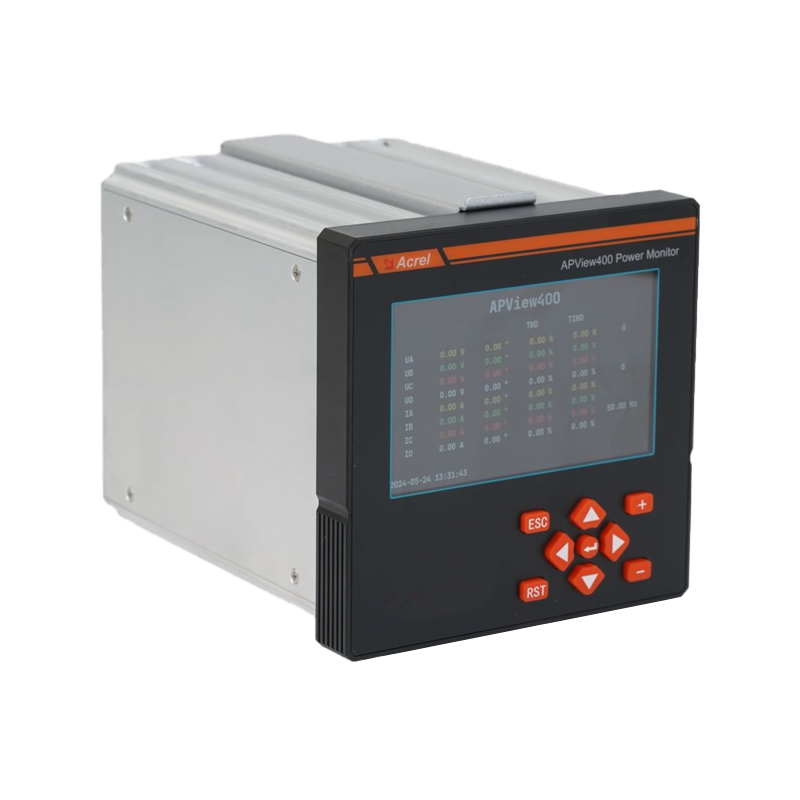 Part 1: Introduction 1.1 What is Power Quality and Why is it Important? In modern society, a stable ...View More
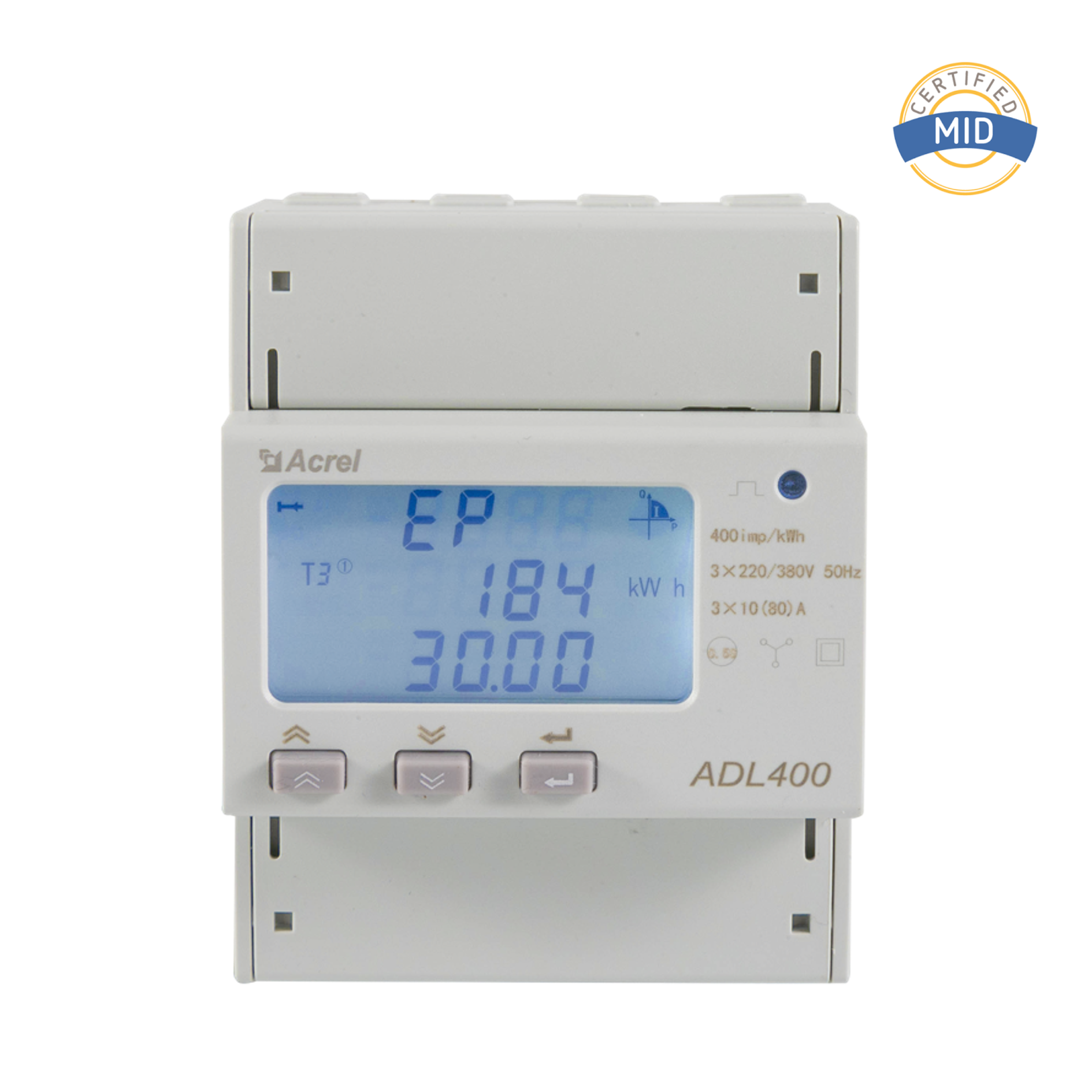 Introduction to AC Energy Meters In today’s rapidly evolving energy sector, accurate measurement and...View More
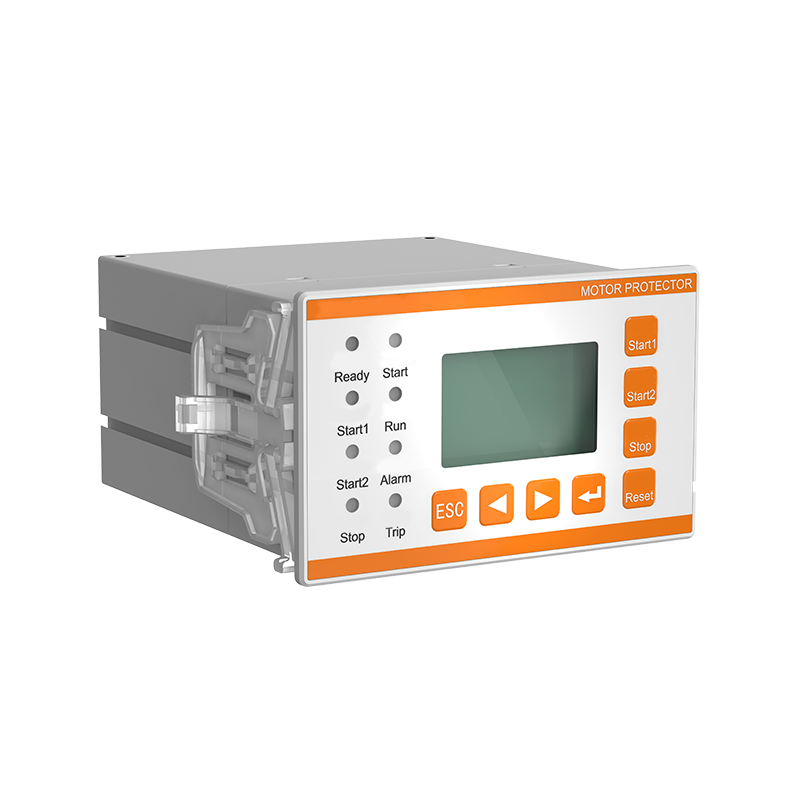 I. Introduction: The Critical Need for Motor Protection Electric motors are the undisputed workhorse...View More
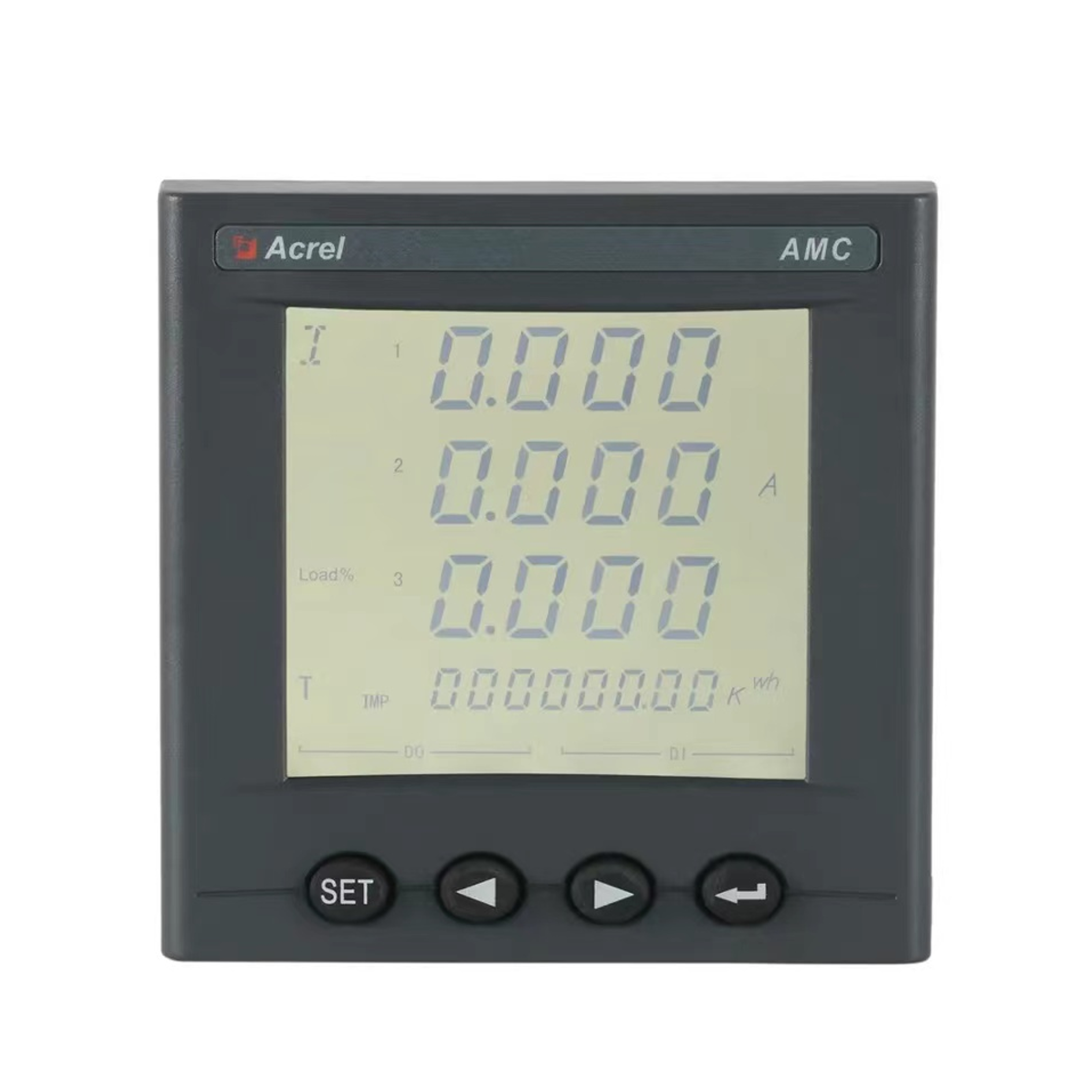 Introduction In modern industrial and commercial power environments, precise measurement and managem...View More

 Email: [email protected]
 Phone: +86-18702106858 / +86-21-69156352




