

 English
 Deutsch
News
Home / News / Industry News / Acrel UPS Monitoring System: Safeguarding Your Power Continuity and Reliability
What is a UPS?
UPS (Uninterruptible Power Supply) is an emergency power supply device that integrates power conversion, energy storage, and control functions – a comprehensive power protection system incorporating rectifiers, inverters, batteries, static switches, and control circuits.
Its core functionality comprises two key aspects:
First, when utility power is normal, it filters out grid disturbances such as voltage fluctuations, surges, and harmonics, delivering stable and clean power to loads.
Second, upon utility power failure, it seamlessly switches to battery-stored energy (online UPS switching time <10ms) to prevent load equipment from crashing and data from being lost.
Critical Clarification: A UPS ≠ Just a Battery! The battery is merely the "energy storage component," responsible only for storing electrical energy. A complete UPS system requires coordinated operation of core modules including rectification, inversion, and switching to fulfill its power protection mission.
Mainstream UPS Topologies and Key Differences:
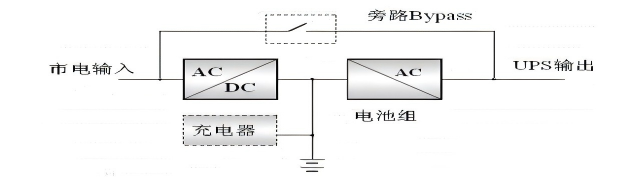
Online UPS supplies load AC power through the inverter circuit regardless of grid voltage status, keeping the inverter always operational. During outages, it immediately converts stored battery energy into AC power for the load, achieving zero-interruption transfer.
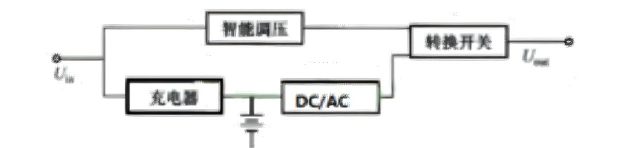
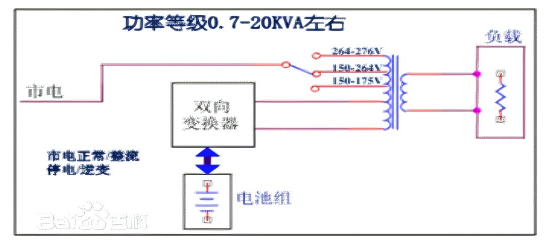
During normal utility operation, it supplies improved utility power to loads through intelligent tap-changing transformer regulation, while the inverter works in reverse mode to charge the battery. During outages, loads are entirely powered by battery energy through the inverter. This bidirectional converter functions as both inverter and charger.
Acrel Solutions:
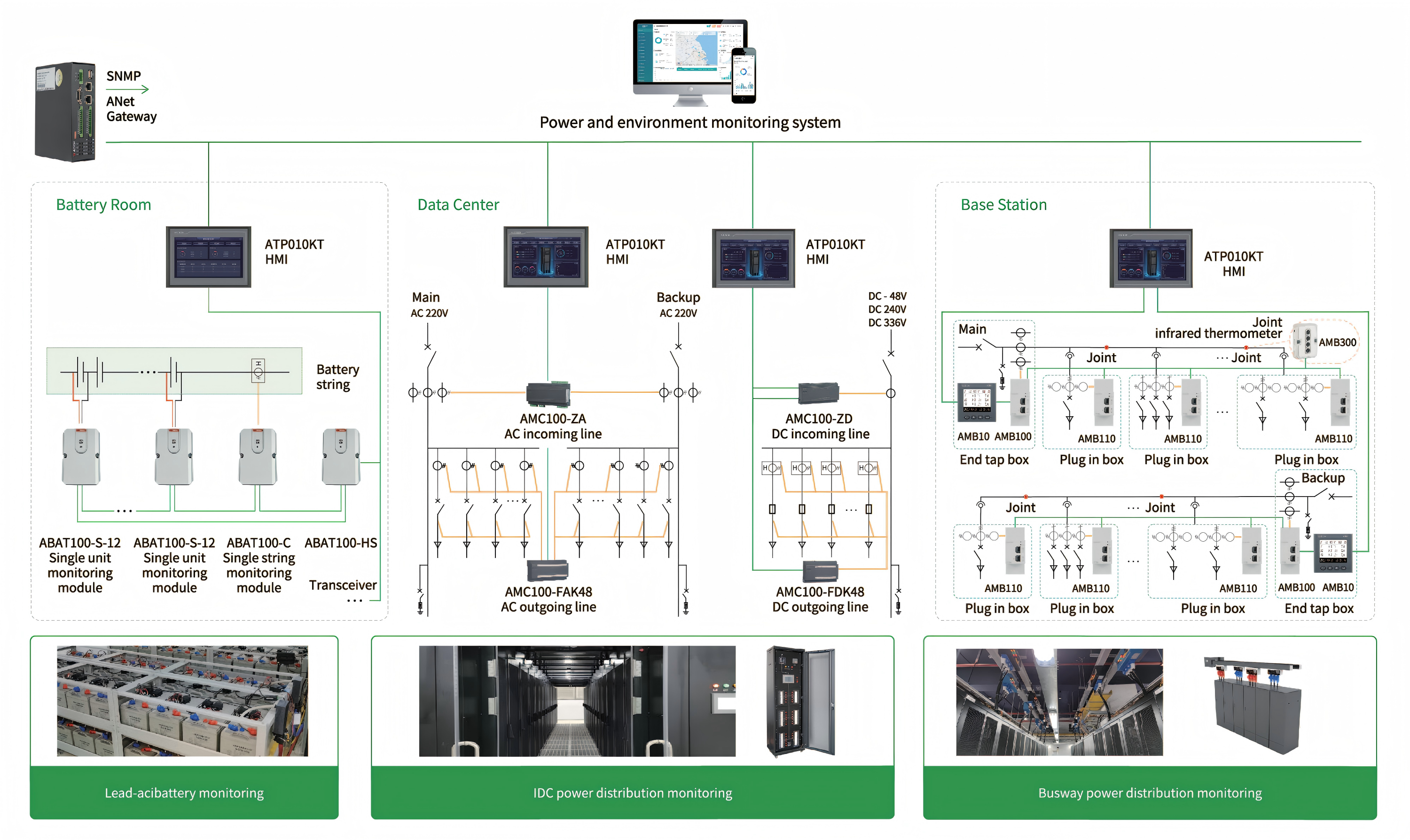
Battery Monitoring
| Terminal Name | Terminal Description |
|---|---|
| Top J1 Port | Connects to battery positive and negative terminals |
| Bottom COM1/COM2 Ports | Internally parallel UART interfaces for cascading communication between S modules |
| Terminal Name | Terminal Description |
|---|---|
| Top J1 Port | Connects to current transformer and ambient temperature sensor |
| Bottom COM1/COM2 Ports | Internally parallel UART interfaces for cascading communication between S modules and converters |
| C Module Accessories | Hall-effect current sensor |
| Bottom Power Input Port | DC24V input |
DC Meters


 Email: [email protected]
 Phone: +86-18702106858 / +86-21-69156352
No.253 Yulv Road, Jiading District, Shanghai, PRC 201801





